
Everything you need to know about the heat pump: how it works and its impact on energy performance
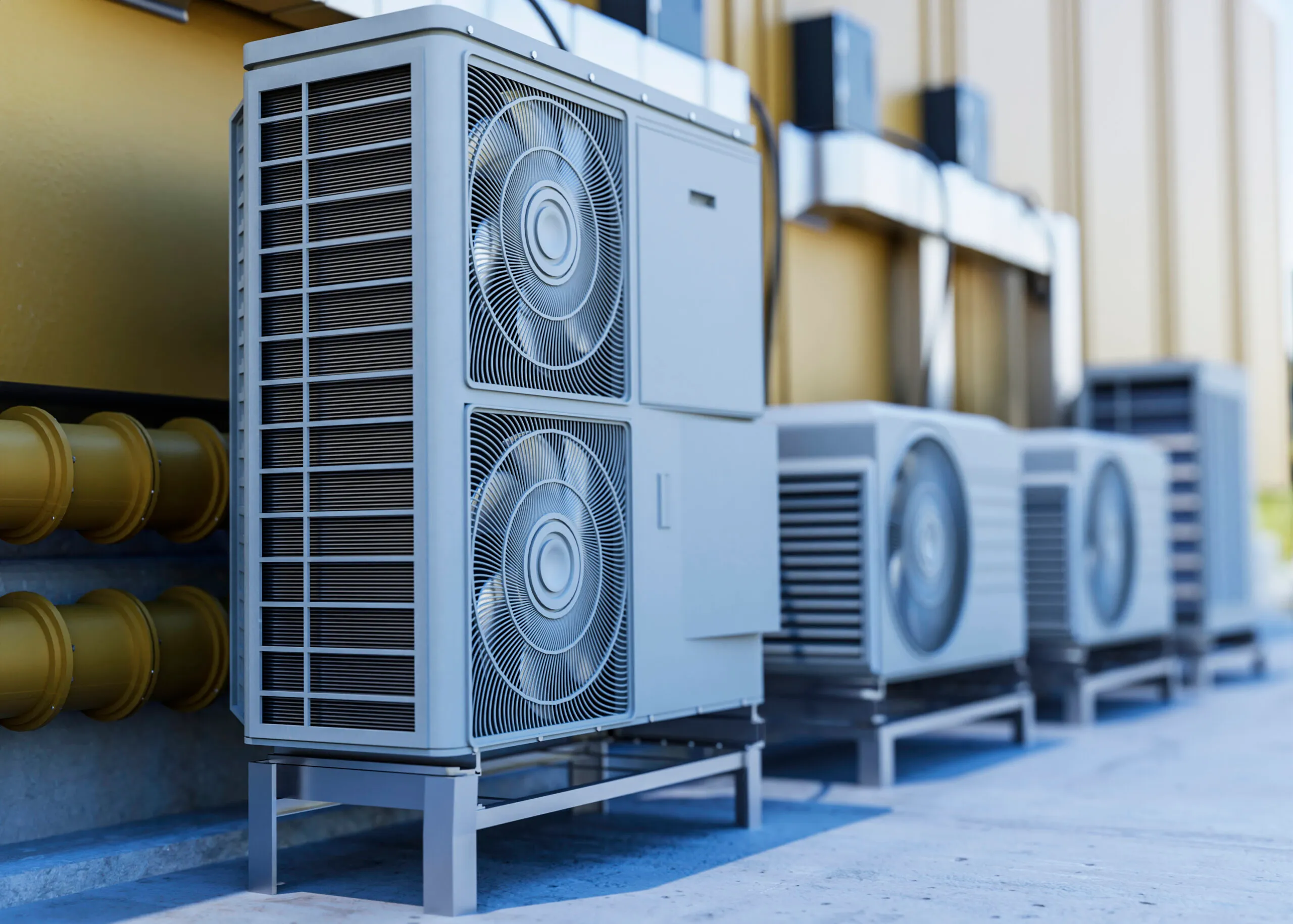
Today, we find ourselves in a context that combines a climate emergency and soaring energy prices. In these conditions, the heat pump stands out as a truly strategic choice for your home!
Much more than just a heating system, it is above all an investment that will allow you to combine thermal comfort and savings.
Do you want to optimise your property, meet the challenges of energy renovation and comply with the latest energy performance regulations? As an owner, it is therefore essential to fully understand how a heat pump works and its real impact.
The heat pump at the heart of the energy transition
The heat pump, or PAC, is a heating and sometimes cooling system that captures the energy naturally present in the environment: outside air, the ground, etc.
The aim? To release this energy inside the building by using a small amount of electricity to move a large amount of heat. In terms of efficiency, it's wonderful!
There is currently a real boom in the heat pump in households, and it is no coincidence. Many factors make this technology a cornerstone of energy renovation:
- The explosion in energy prices. Gas and electricity rates are yo-yoing, and many of us today are looking for real solutions to reduce our bills.
The heat pump generally consumes 3 to 4 times less energy than it produces.
- Regulatory changes. The EPC (Energy Performance Certificate) and the energy audit have become mandatory for many property transactions. For both sales and lettings, the rules in force are changing rapidly.
A heat pump is a very effective lever for improving a property's energy rating.
- The RE2020 and the progressive bans. For all new builds, the installation of oil boilers is banned! And this is likely to extend to gas boilers.
An alternative for your heating system: the heat pump.
- The impact on your asset value. A home fitted with an efficient heat pump can gain one or two energy ratings on the EPC. Your property is then valued on the market as an energy-efficient building, which is a good selling point and can influence the price!
How does the heat pump work?
Here, we're going to get a little more technical. How this equipment works is based on a physical principle: the thermodynamic cycle.
Unlike a boiler that burns fuel to produce heat, the heat pump simply uses and moves the energy present in the environment.
To put it simply, it's a bit like a refrigerator, but in reverse! Instead of extracting heat from its interior compartment to release it outside, the heat pump recovers the heat present outside to transfer it inside your home.
The heat pump is, above all, four key stages!
The thermodynamic cycle breaks down into 4 successive phases, which repeat:
- Evaporation,
- Compression,
- Condensation,
- Expansion.
To be a little more precise, this means turning a fluid from a liquid state into a gaseous state (evaporation).
This fluid, now turned into gas, passes through a compressor and sees its pressure and temperature increase (compression).
Then this same gas passes through a condenser, which releases the heat. During this process, it returns to a liquid state as it cools and condenses (you guessed it: this is the condensation stage).
Finally, this same liquid passes through an expansion valve and returns to its initial state (expansion), and the cycle can then begin again.
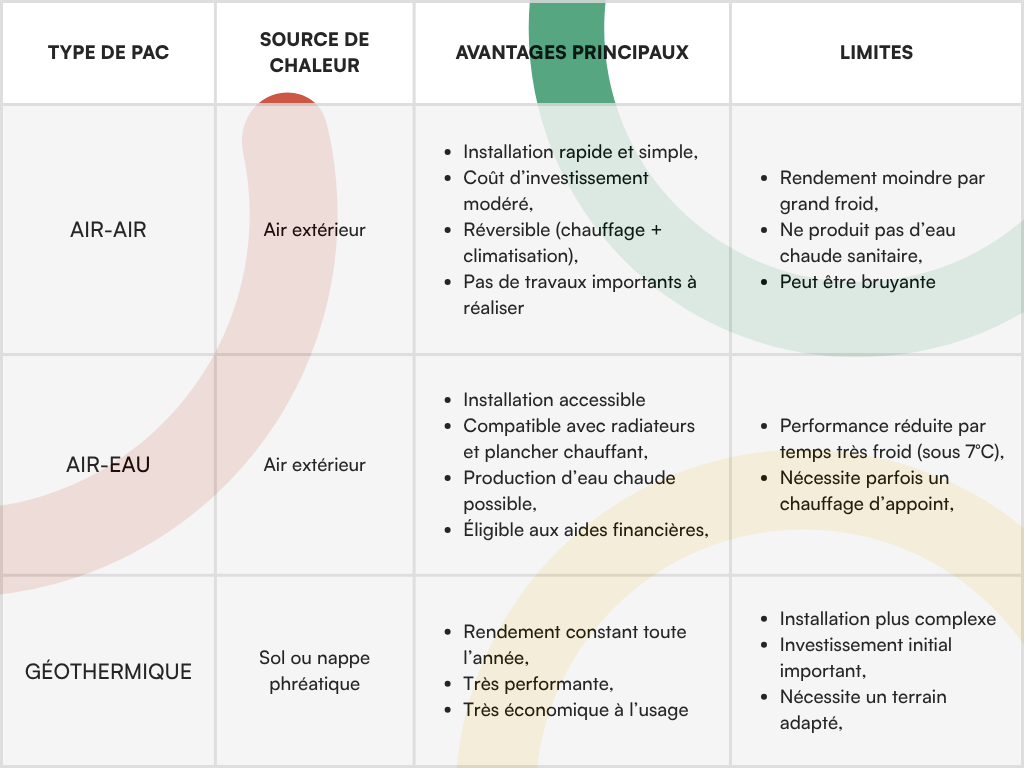
Which heat pump should you choose for your property?
Heat pumps integrate easily into your heating, cooling or domestic hot water system. You can also combine heating and cooling with reversible models, or heating and domestic hot water when the heat pump has a thermodynamic tank to produce the hot water.
Generally, you install an outdoor unit that captures the 'calories' and one or more indoor units (underfloor heating, radiators, etc.) that distribute the heat, connected by refrigerant lines.
It is important to choose the right heat pump, suited to your needs and your home. There are various types of equipment available on the market.
The performance indicators of your heat pump
The efficiency of your installation can be assessed using two indicators:
- The COP (Coefficient of Performance): indicates the ratio between the energy produced and the energy consumed. It is the instantaneous performance indicator.
- The SCOP (Seasonal Coefficient of Performance): measures the average performance over a full heating season, taking climatic variations into account. It is the indicator most representative of reality. It is also the most reliable indicator for comparing different heat pumps.
💡A little tip: a high COP does not necessarily reflect the real performance of your heat pump. For the best comparison of different models, favour the SCOP.
Maintaining your heat pump and keeping it efficient
That's it, you've taken the plunge, you've decided to install a heat pump in your home! Congratulations on this big step towards good energy performance.
But a heat pump is only efficient if it is properly installed and maintained!
Here are the mistakes to avoid so you don't end up with inefficient equipment:
- Incorrect sizing of the equipment
A heat pump that is too small will run constantly and therefore wear out faster. An installation that is too large will run short cycles that are more costly and less efficient,
- Insufficient insulation
Installing a heat pump in an energy sieve is a bad idea! It's like deciding to heat your home with the windows open.
- Compatibility with the indoor units
Not all radiators are suited to heat pumps, so this should be looked into before installation.
- A poorly maintained system
Without proper maintenance, your heat pump will lose performance.
Since 2020, a leak-tightness check has been mandatory every 2 years for all heat pumps containing more than 2kg of refrigerant. In practice, this therefore concerns most models.
A full annual service by a professional is the guarantee of maintaining your installation's optimal performance and promoting its longevity.
The importance of the heat pump in assessing energy performance
Installing a heat pump in your home can help you improve its energy performance.
By replacing your old oil or gas boiler with a heat pump, you considerably reduce your greenhouse gas (GHG) emissions and you can change energy rating in the EPC calculation.
All this depends on your installation and your budget. It should be remembered that the heat pump is not a universal solution! As we mentioned above, its installation and efficiency depend on several factors: existing efficient insulation, precise sizing of the equipment to suit your home, suitable indoor units (underfloor heating, low-temperature radiators, etc. Beware of old radiators!) and finally it is essential to set up your heat pump correctly.
👉 The Energy Performance Certificate includes the heating system in its calculation! Having an efficient heat pump in your home helps improve your energy rating. But it is obviously not the only thing that is analysed.
👉 As for the energy audit, now mandatory for the sale of F- and G-rated homes, it goes a little further than the EPC and offers prioritised and costed works scenarios. The heat pump frequently appears as a major recommendation as part of an overall renovation.
Installing a heat pump is above all a step towards a more energy-efficient home.
A quick recap of best practices for heat pumps
Are you embarking on a project to install a heat pump? Let's go back over the essential points to follow:
- Have a preliminary thermal study carried out,
- Choose an RGE-certified installer (so you can benefit from financial support),
- Check compatibility with your electrical installation,
- Plan the location of the outdoor unit in advance,
- Check your property's insulation,
- Arrange a maintenance contract,
- Find out about the available financial support,
- Fully enjoy your new installation!
A consultancy that comes to you as soon as possible
Are you thinking of installing a heat pump in your home? Do you want to have a property survey or an energy audit carried out to find out your property's potential?
RITMODiag and RITMOAudit support you with every step. Call on our experts to visit you as soon as possible.
Start enhancing your property assets now with an energy performance project!
Related diagnostic
EPC (Energy Performance Certificate)
A property project? Get a quote for your diagnostics.
Related articles
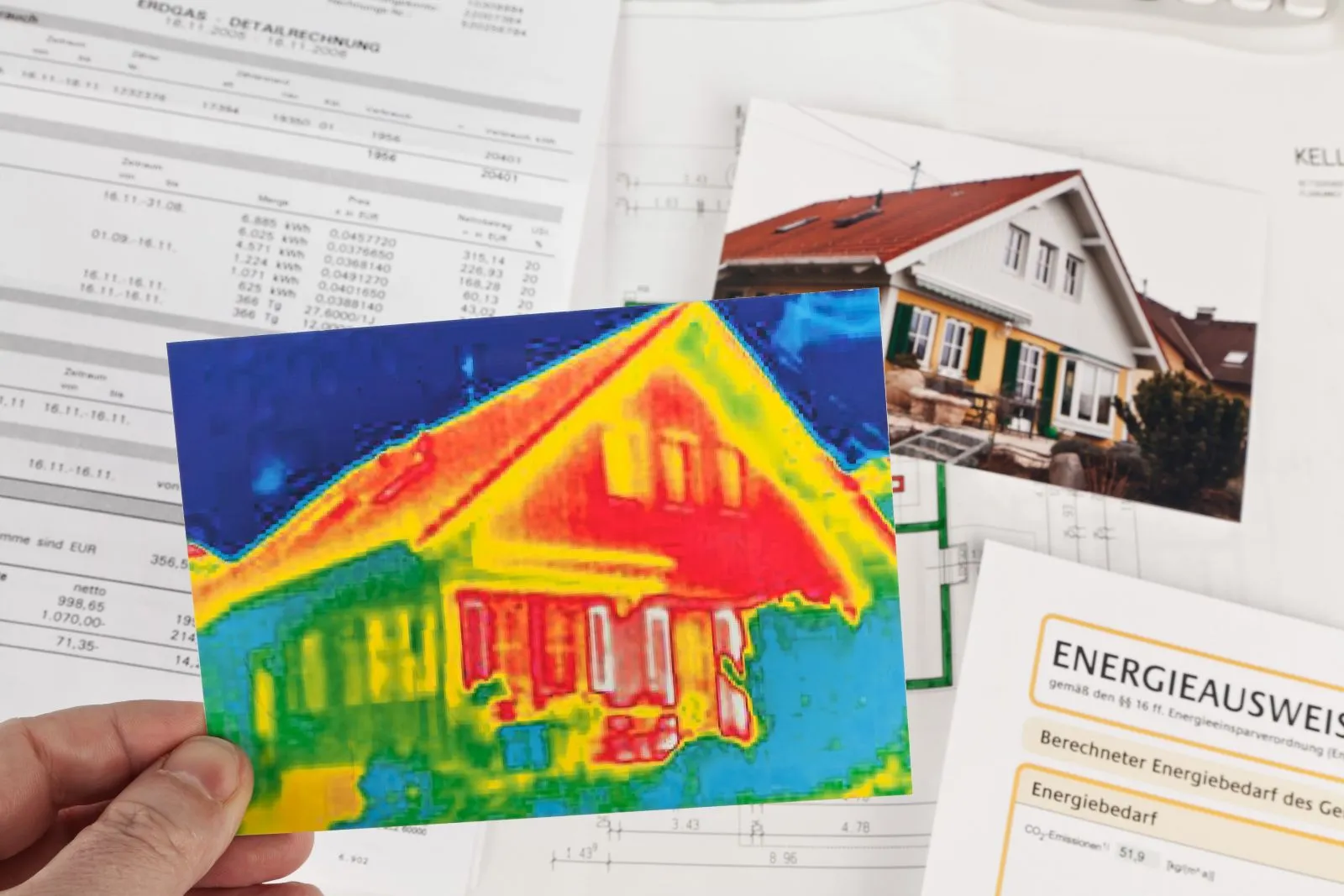
Building or renovating? Why a thermal study goes beyond simply meeting RE2020
When you decide to embark on a property project, one question inevitably arises: should you build new or renovate an existing home?
Read more →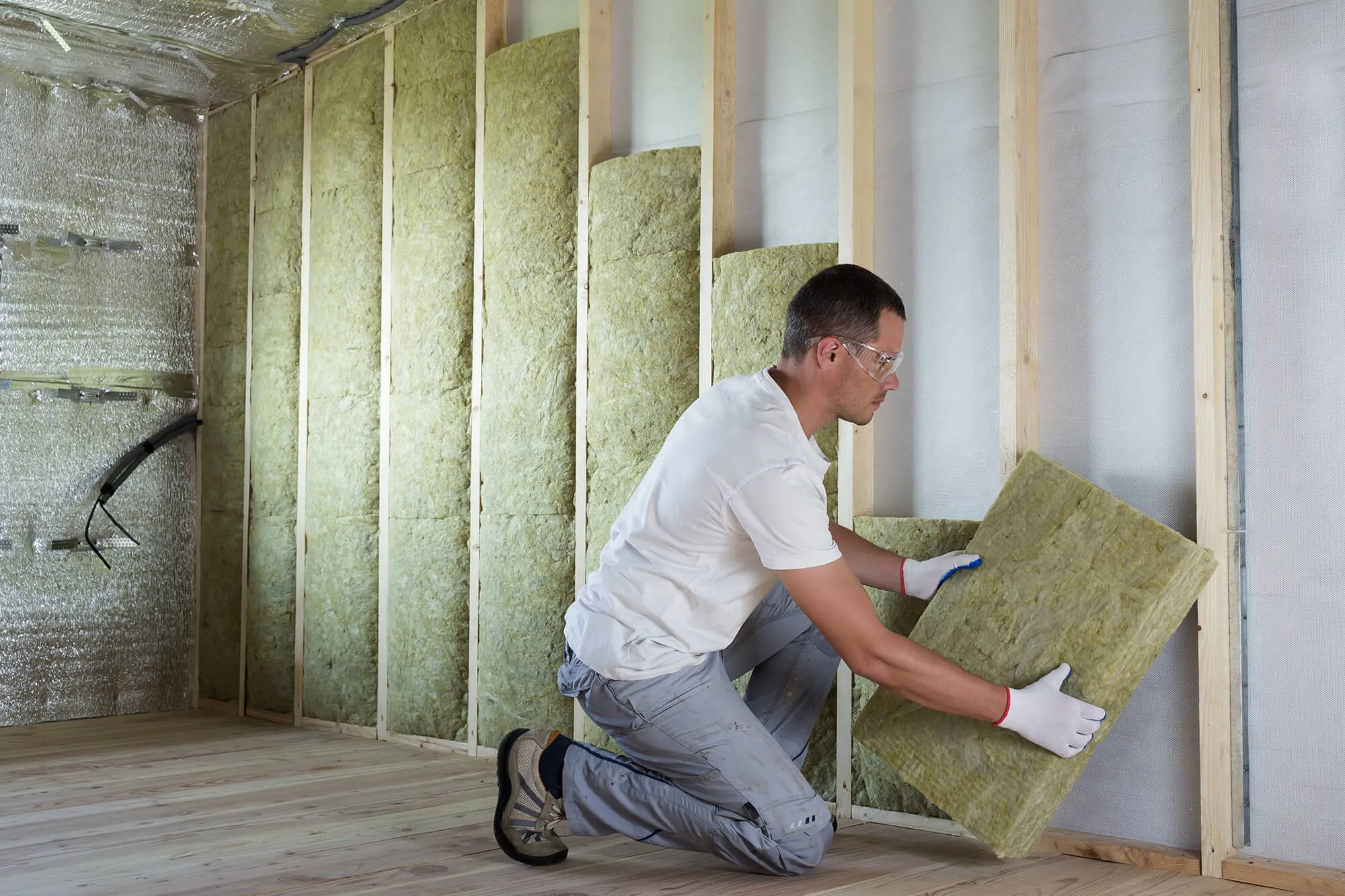
Insulation: the cornerstone of your energy renovation
In the face of rising energy prices, as well as the tightening of regulations concerning the energy transition, insulation is becoming the centrepiece of every energy renovation project.
Read more →
A reformed EPC, but labels that are not hidden.
For several years, numerous regulatory changes have sought to reshape the landscape of energy renovation and aim to remove energy sieves from the national housing stock.
Read more →