
A reformed EPC, but labels that are not hidden.
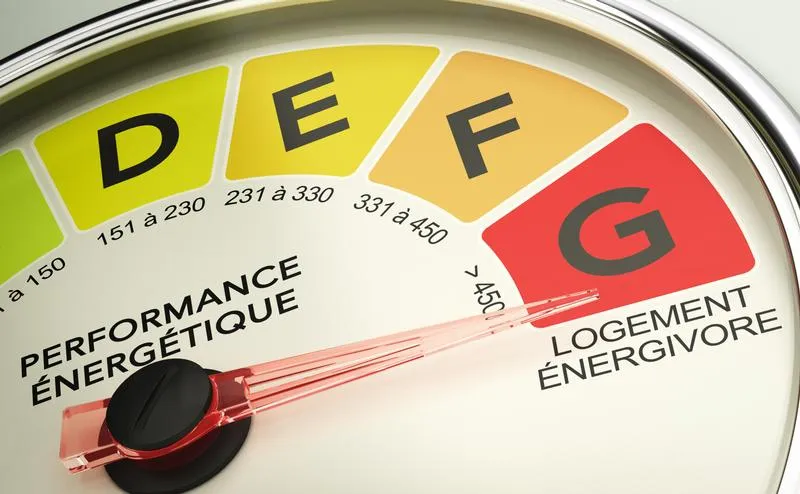
For several years, numerous regulatory changes have sought to reshape the landscape of energy renovation and aim to remove energy sieves from the national housing stock.
The property survey sector is particularly affected by all these reforms. Today, our RITMODiag consultancy takes a look back for you at the latest measures, and in particular one of them: the hiding of energy labels on the EPC.
The Energy Performance Certificate, a central survey
Among all the mandatory property surveys required for your property transactions – sale or letting – the EPC holds a special place.
It has established itself as a reference document for owners, landlords and tenants alike, as well as for property professionals.
What is the EPC?
The Energy Performance Certificate makes it possible to assess a home’s energy consumption as well as its environmental impact. In the current context, the energy transition is at the heart of global concerns, particularly in the property sector. It is a compelling argument for any sale or letting.
The EPC classifies properties according to two criteria:
- Consumption in kWh/m² per year, shown on the energy label,
- Greenhouse gas emissions in kg of CO₂, on the climate label
The rating ranges from A for the most economical and best-performing homes to G for energy sieves. The Energy Performance Certificate is valid for 10 years, but it can be redone to enhance your property’s value following works or a new reform.
💡Good to know: since 2021, the EPC takes into account 5 areas of consumption compared with 3 previously: heating, domestic hot water, cooling (air conditioning), lighting, and auxiliaries (fans, mechanical ventilation, etc.).
Unlike the other surveys (asbestos, lead, gas or electrical survey), the EPC does not simply seek to protect the safety and comfort of occupants, but to highlight the energy impact of properties.
The major issue that this property survey represents
As we briefly mentioned earlier, the EPC supports the energy transition policy in France. The primary objective? The fight against energy sieves!
All homes rated F or G on their energy labels are categorised as energy sieves because they have high energy consumption and greenhouse gas emissions. And this energy label provided by the EPC has a real impact on sale and letting.
An impact that is only growing stronger as the timetable of legal obligations for all property transactions evolves.
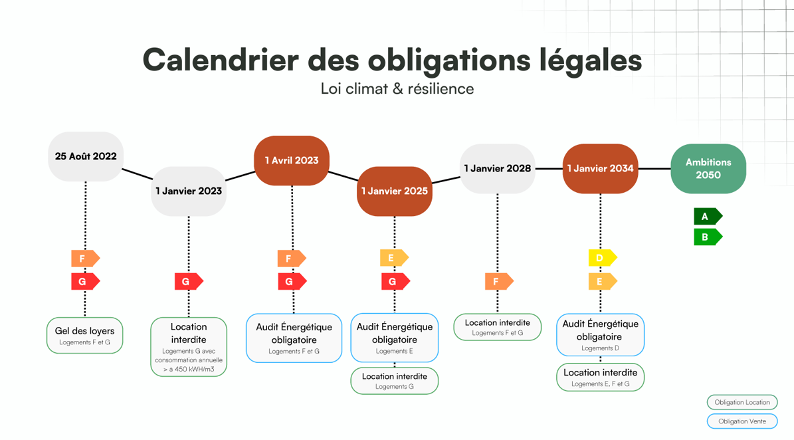
A poor EPC therefore means a devaluation of the asset, but also a possible reduction in the property’s price!
New regulatory changes, but labels that remain visible
The EPC: a survey in constant evolution
The EPC continues to evolve to adapt to the realities on the ground and to best meet the expectations of individuals and professionals alike!
In July 2024, to clarify an order of 25 March, a reform came into force concerning the adjustment of thresholds for small properties of under 40m², which had until then been disadvantaged, allowing 140,000 homes to leave the “energy sieve” category.
There is also a constant drive to improve the calculation method by better accounting for the specific features of buildings. And checks to guarantee the quality of professionals’ services are intensifying.
Among the changes proposed for the Energy Performance Certificate, the hiding of energy labels made its appearance.
Dropping the hiding of labels: where do things stand?
A look back at a controversial measure
In March 2025, 10 measures were announced aiming to improve and strengthen the reliability of the EPC. Among them: the temporary hiding of energy labels until the report is sent to ADEME (the Environment and Energy Management Agency).
In practice, the surveyor would not have been able to show the property’s energy label to the owner immediately after the visit, but only after validation by ADEME.
As a result, all the parties in the property transaction were affected by this reform: owners, landlords and estate agents could no longer see the labels and, at the same time, property listings would have had to be published without mention of the property’s energy rating while awaiting validation.
The reasons behind this reform on labels
This reform sought above all to protect surveyors from the pressure of certain clients regarding the energy rating provided, and to strengthen the reliability of the EPC.
The aim was to dispel the distrust of some owners or landlords towards the surveying profession and to affirm the relevance of the EPC, positioning it as a decision-making tool in property and renovation transactions.
Why was this measure ultimately dropped?
This measure, concerning energy labels, was due to come into force on 1st October 2025, but things did not go as planned. Software publishers and various professionals in the field expressed their opposition to this reform.
By choosing to hide such crucial information, even temporarily, many property professionals found themselves paralysed in their work. How could they advise owners on energy renovation, how could they enhance a property’s value when putting it up for sale or letting?
One point raised in opposition to this reform was the desire for transparency with consumers! Owners, landlords, buyers and tenants have the right to access this information.
As a result, the hiding of energy labels was dropped in favour of a system for tracking changes. This leads to a compromise between monitoring practices, keeping work running smoothly, and transparency towards the parties in the transaction.
For owners, what does this change (or not change)?
In practical terms, nothing. The process remains the same:
- The surveyor carries out the visit,
- The Energy Performance Certificate is drawn up,
- The energy labels are displayed immediately,
The owner, and the property professionals supporting them, therefore have the information without delay and can put the property up for sale or letting quickly.
The impact mainly concerns property surveyors, who are now subject to traceability for every change. Ultimately, this can only increase the trust placed in certified professionals and the reliability of the EPC.
Anticipating reforms and surrounding yourself with professionals
Given the constantly changing regulatory framework, we can only advise you to surround yourself with certified professionals in order to best anticipate regulatory changes.
Tightening of rules for energy-hungry homes and expected changes
As we mentioned above, the timetable for letting bans is speeding up, so it is essential to properly plan surveys and any potential energy renovation works to keep your property on the rental market.
The same applies to the rent freeze, which has been extended across the whole country since 2023.
Among the measures taken to reduce the number of energy sieves within the housing stock is the change to the electricity coefficient, which comes into effect on 1st January. Feel free to read our latest article on the subject: “Change in 2026: the electricity coefficient is evolving!”
It is also worth bearing in mind that the EPC is not the only survey in the firing line for change! The lead, asbestos, gas and electrical surveys are not immune to change either, as they are revised regularly. Discussions are under way about validity periods and the obligations to update these property surveys.
RITMODiag helps you make the most of the EPC, an essential tool
The priority for your property? Choosing a certified and experienced professional. To enhance your home’s value, surrounding yourself with the right people is essential.
Our RITMODiag consultancy supports its clients, advising and assisting them in carrying out their surveys and planning energy renovation works.
With costed works recommendations and the ability to propose renovation scenarios through a projected EPC or an energy audit, it is a real asset for your property project.
Want to find out more? Contact our advisers now.
Related diagnostic
EPC (Energy Performance Certificate)
A property project? Get a quote for your diagnostics.
Related articles

Tackling energy sieves: the importance of carrying out an EPC
The Energy Performance Certificate is an essential tool for accurately assessing the energy consumption of a property (home or building). But what exactly do we mean today by a home described as an energy sieve?
Read more →
What is the 3CL method that determines the EPC rating?
For everyone working in the property sector, it is essential to fully understand how this 3CL method works, as it determines a property's energy and climate rating and, since 2021, has had a direct impact on the energy renovation of homes.
Read more →
Changing your windows to improve your EPC rating: a miracle solution?
Among the works most frequently considered to improve your EPC rating, replacing windows is an appealing solution. But, between received ideas and technical reality, is changing the joinery really the key to improving your home’s energy rating?
Read more →