
What is the 3CL method that determines the EPC rating?

For everyone working in the property sector, it is essential to fully understand how this 3CL method works, as it determines a property's energy and climate rating and, since 2021, has had a direct impact on the energy renovation of homes.
The Climate and Resilience Act of 2019 aims to change consumption habits and promote the energy transition. Since July 2021, the Energy Performance Certificate (EPC) has changed to adapt to these regulations and has become a genuine benchmark tool.
At the heart of this drive for ecological and environmental transition, the 3CL method emerged, an acronym for Calcul de la Consommation Conventionnelle des Logements (Conventional Calculation of Housing Energy Consumption).
Now established as the reference calculation method, it is a tool that makes it possible to produce, through a standardised calculation, a rating for the EPC.
The new EPC and the importance of its calculation method
Before 2021, two calculation methods coexisted, which could create real discrepancies when assessing homes, but above all it caused concern among owners about the results and the accuracy of the EPC!
The first method, known as the bill-based method, relied on actual consumption.
But the major drawback was that it depended on the behaviour of the occupants rather than the characteristics of the home! As a result, a poorly insulated property could obtain a good rating if its occupants used little heating, whereas an energy-efficient home could receive a poor assessment if the occupants consumed a great deal.
The second method was therefore the 3CL: the Conventional Calculation of Housing Energy Consumption. Before it was reformed, it was a method that estimated energy consumption from the physical characteristics of the building and was independent of the occupants' behaviour.
Since the reform of 1 July 2021, only the revised 3CL method (known as 3CL-DPE 2021) is used across the entire housing stock.
The aim of this standardisation is to make the Energy Performance Certificate more reliable and more objective! It is now also legally binding.
In France today, the primary goal is to make homes more energy-efficient.
With this in mind, the EPC is a tool that helps identify energy sieves and support their renovation as effectively as possible.
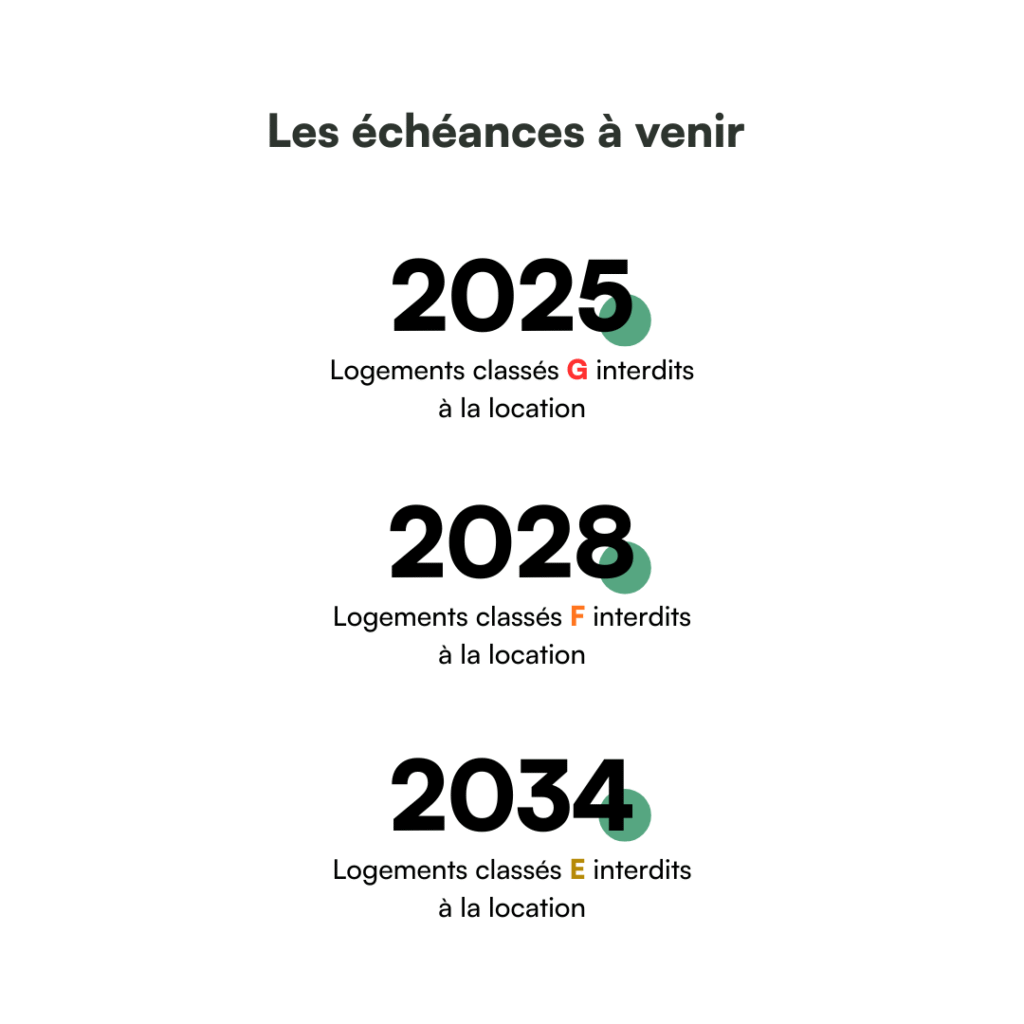
As a reminder, the regulations governing energy ratings are changing:
The principle of the 3CL method and its objectives
The 3CL method is based on assessing the theoretical energy performance of a home, relying exclusively on its physical and technical characteristics, without taking into account the behaviour of its occupants.
💡 A little memory aid? Beyond the calculation itself, the three Cs of the method can also stand for the aim to Comprendre les Composantes Clés (understand the key components) that influence a home's energy performance and climate rating!
The 3CL method takes into account several parameters, such as:
- Wall insulation,
- Roofing,
- Floors,
- Windows and doors,
- Heating system,
- Hot water production,
- Ventilation,
- Energy production, etc.
But the surveyor may also have to take into account the orientation of the building or
local climate data. It is a genuine multi-criteria analysis that provides a
complete and nuanced assessment of the home's energy performance and climate rating.
The 3CL rating system is based on two main indicators:
- Primary energy consumption,
- Greenhouse gas emissions
They are expressed in kWh/m²/year and kgCO2/m²/year and then determine the home's energy rating, ranging from A to G.
🧠 Good to know: it is the least favourable rating that is used for the home's final energy rating, ensuring an assessment that may seem strict but that is closest to 'actual' consumption.
The dual rating makes it possible to reward renewable energy while at the same time penalising systems that emit high levels of CO2, such as oil or gas heating.
Changes to the 3CL method since 2021
The 3CL-DPE 2021 version marks a significant change from previous practices!
This new method incorporates more sophisticated calculation algorithms, taking into account more elements such as:
- Thermal bridging,
- Building inertia,
- Greater consideration of renewable energy, etc.
As a result, these changes make it easier to reward installations that support the ecological transition, such as photovoltaic or solar systems.
Property surveyors must use regulated and regularly updated
software to carry out an EPC using the 3CL method.
A trustworthy tool for assessing energy performance and a lever for renovation
By choosing a single method for all homes, this is a great step forward for the property sector!
Today, whether it is a detached house, a flat in a co-ownership, a new home or an older building, the same framework applies!
What is more, thanks to this standardisation, we can now rely on a consistent database to track the evolution of the French housing stock and the energy renovations that can be carried out!
The 3CL method is a true cornerstone for producing an energy performance certificate! It is a genuine instrument for measuring the energy performance of a property and it can now strengthen credibility and trust among owners regarding property surveys.
The importance of energy performance is a key consideration in the minds of households today, who think about their comfort but also about the savings they can make.
→ A well-produced EPC is a good way to plan ahead!
Energy renovation is becoming a priority in the current context, and the 3CL method contributes to its rollout across the entire housing stock by identifying a home's points of heat loss and suggesting that work be directed towards the most energy-intensive areas.
Targeted renovation within a home also guarantees clearly defined energy savings! But how do you go from the calculation using the 3CL method to an EPC report setting out the home's energy performance and costed improvement scenarios?
From calculation to EPC rating: the importance of the 3CL method in determining the energy rating
As mentioned above, the 3CL method results in a dual rating: one for primary energy consumption and one for greenhouse gas emissions.
As for energy consumption, the thresholds were set by a decree of 31 March 2021.
| Energy consumption rating | Defined thresholds (kWh/m²/year) | Defined thresholds (kg CO2/m²/year) |
| Rating A | Below 70 | Below 6 |
| Rating B | 70 to 110 | 6 to 11 |
| Rating C | 110 to 180 | 11 to 30 |
| Rating D | 180 to 250 | 30 to 50 |
| Rating E | 250 to 330 | 50 to 70 |
| Rating F | 330 to 420 | 70 to 100 |
| Rating G | Above 420 | Above 100 |
With the 3CL calculation method, standardised conditions of home use are assumed, meaning a temperature set at 19°C during the heating season and standard water use.
It is a theoretical approach that assesses the home itself and not the behaviour of the occupants, as we mentioned above. It is because of this method of calculation that there can sometimes be a difference between the consumption shown on the EPC and the actual bill.
We know that today, the advice and recommendations for improving a home's energy performance are an important part of the EPC! And these recommendations stem directly from the results of the 3CL calculations.
A new, clearer and more reliable picture of the energy performance of properties is emerging today thanks to the 3CL method. The Energy Performance Certificate is no longer a mere administrative formality or a matter of complying with regulations, but a genuine selling point!
What about energy audits in all this?
The EPC is a real asset for owners of energy-efficient properties, and a guide to increasing value for energy sieves. The aim here is transparency about the home's energy performance. Of course, some owners may decide to go even further in analysing their home and the scenarios proposed for energy renovation by carrying out an energy audit.
The energy audit relies on the same calculation principles as the 3CL method, but includes a more thorough visit of the home and an in-depth analysis of the technical documents.
The impact for surveyors and owners
For us property surveyors, the adoption of the 3CL method has represented a major change in how we carry out our professional practices!
The EPC now requires much more precise information gathering during the home visit:
- On-site measurements,
- Recording of surfaces and volumes,
- Identification of insulation materials,
- Characterisation of energy systems,
- Analysis of technical documents.
Every piece of data can influence the result of the Energy Performance Certificate. And our profession obviously requires us to keep up with changes to the method and updates to the calculation software!
From the owners' point of view, the introduction of this method offers a new way of reading their property's performance. It is an objective, quantified and standardised assessment that is recognised by all players in the property market.
They then have an opportunity to improve their asset in a targeted way and to gain a competitive advantage. It should also be noted that the 3CL method and the EPC make it easier to access financial support such as MaPrimeRénov' to determine eligibility and the amount of grants.
What are the key takeaways of the 3CL method?
Since 2021, the 3CL method has been the cornerstone of the new EPC, bringing reliability and objectivity to the assessment of the energy performance of properties.
- The key points to remember:
- A single method,
- A multi-criteria calculation,
- A tool to work towards the energy renovation of the property,
- A transformation of the property market,
- A professional tool, with dedicated software
The real aim is to provide a detailed roadmap towards improving the energy performance of the housing stock, in particular by identifying properties that lose too much heat!
To find out more, don't hesitate to call on the professionals at RITMODiag!
RITMODiag provides you with qualified and experienced professionals. Our team, regularly trained on regulatory changes, is at the service of property professionals and owners to provide advice and assistance.
We are by your side to answer all your questions, technical or otherwise, and to guide you towards the solutions best suited to your needs.
Don't wait any longer to have a property's energy performance assessed; choose a trusted partner! Contact RITMODiag now to make an appointment and benefit from a quality survey.
Together, let's build more energy-efficient homes within the French housing stock!
Related diagnostic
EPC (Energy Performance Certificate)
A property project? Get a quote for your diagnostics.
Related articles
A reformed EPC, but labels that are not hidden.
For several years, numerous regulatory changes have sought to reshape the landscape of energy renovation and aim to remove energy sieves from the national housing stock.
Read more →
Changing your windows to improve your EPC rating: a miracle solution?
Among the works most frequently considered to improve your EPC rating, replacing windows is an appealing solution. But, between received ideas and technical reality, is changing the joinery really the key to improving your home’s energy rating?
Read more →
Tackling energy sieves: the importance of carrying out an EPC
The Energy Performance Certificate is an essential tool for accurately assessing the energy consumption of a property (home or building). But what exactly do we mean today by a home described as an energy sieve?
Read more →