Property, EPC, energy renovation: where do we stand?

Should you buy a property to renovate in 2026?
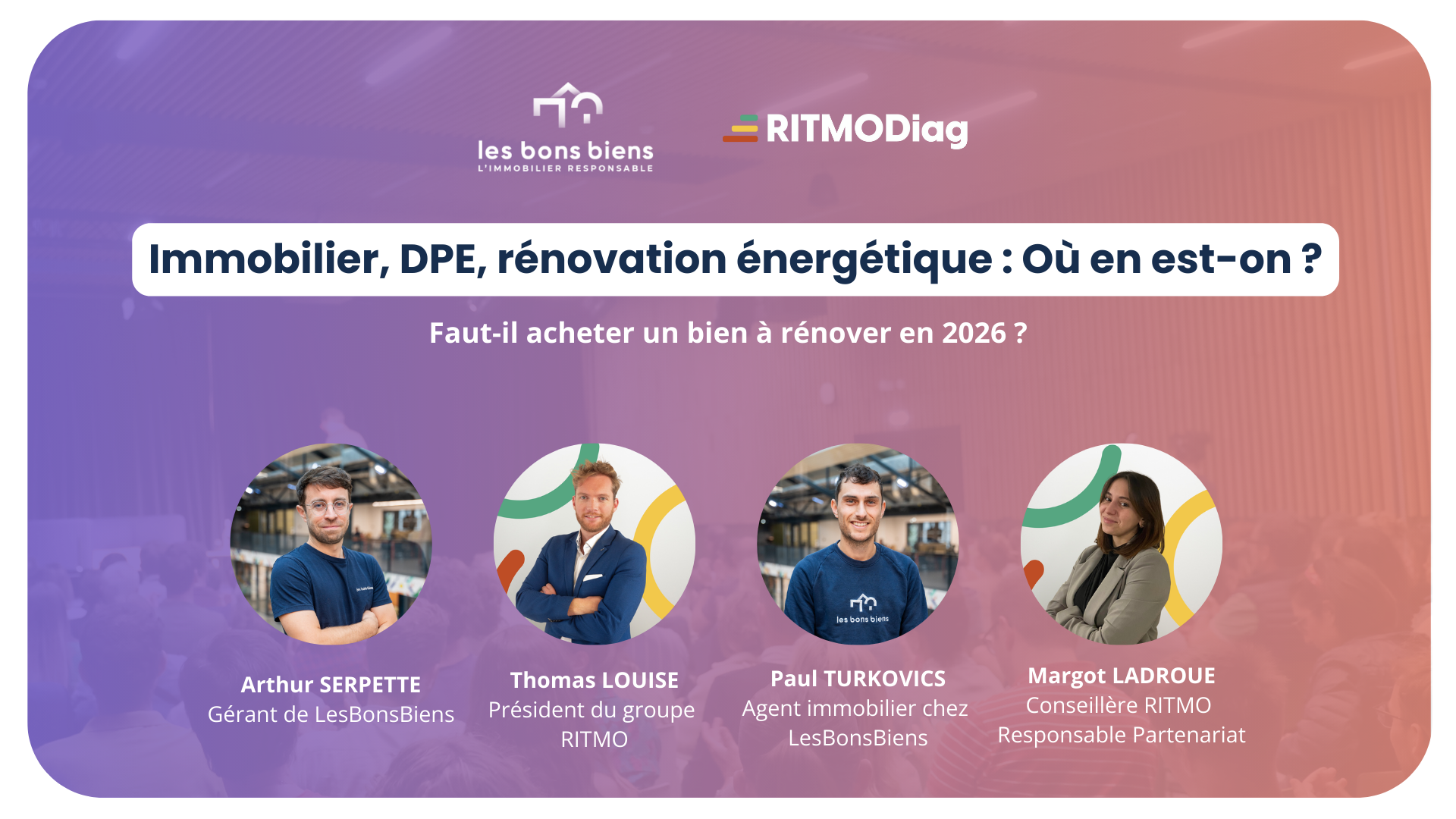
On 6 November, RITMODiag partnered with the estate agency Les Bons Biens to host a conference on the theme of energy renovation and property.
From Les Bons Biens, Arthur SERPETTE, manager, and Paul TURKOVICS, estate agent, were joined by Thomas LOUISE, president of the RITMO group (RITMODiag and RITMOAudit), and Margot LADROUE, RITMO adviser and head of partnerships.
Here is a recap of this conference and the various topics covered.
A discussion about the property market in 2025 and the forecasts
First and foremost, this conference offered an overview of the property market as it stands today in France, but also in Normandy.
The speakers from the estate agency Les Bons Biens looked back at how the market has evolved over the past 10 years, and in particular the rise in property prices that has taken hold since 2017.
In 2023, after a peak in price increases, the market is fluctuating. And this too was highlighted during the conference: the property market is a living market, one that is constantly evolving.
One point raised in particular was Caen’s place within this property market: our small Normandy city is attractive, with properties that draw in potential buyers!
Property prices in Caen have remained stable over the past few months, and even over the past year. But looking at the bigger picture, prices have soared: they have risen by 49.6% over the past 10 years.
“It can be a good opportunity to buy in Caen, provided you are well informed.” – Paul TURKOVICS
Properties on offer in the property market: yes, but properties that are classified and rated! This is where property surveys come into play.
The correlation between buying a home and the EPC
Today, the rating given by the EPC for a home is one of the most important criteria in the eyes of buyers.
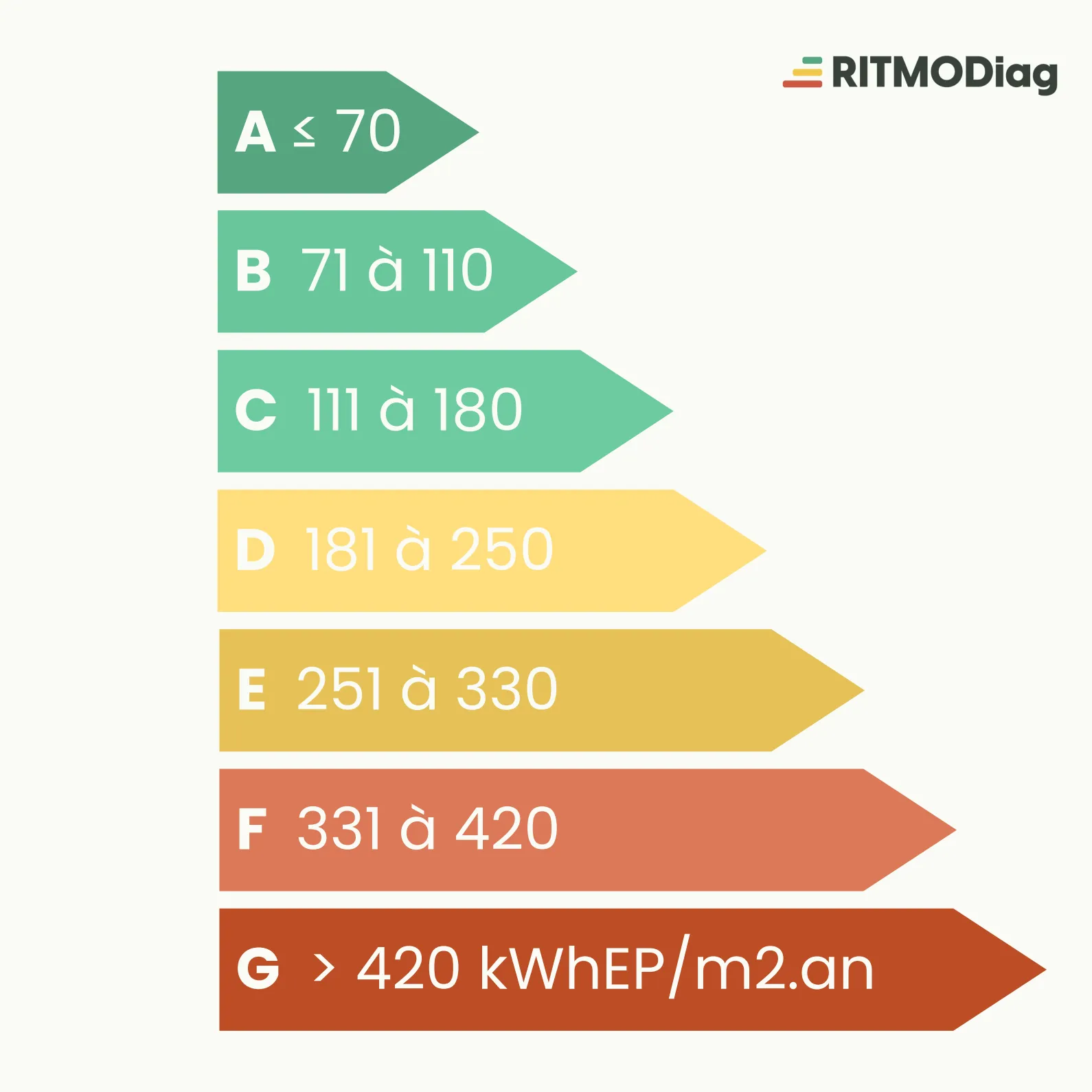
The EPC, or Energy Performance Certificate, provides information on the energy and climate performance of a home and assigns it a rating (a label ranging from A, for the most energy-efficient homes, to G, for energy sieves).
In France, 32% of homes are currently rated E, F or G (i.e. energy sieves),
In Caen, this represents almost 39% of homes.
At local level, this figure stood at 47% a few years ago, which shows real progress in energy renovation as well as the arrival of new builds within the housing stock.
Beyond an energy class rating, the EPC can influence the price of a property. A home rated E, F or G can lose up to 15% of its market value!
The EPC and its calculation method: how is a home’s rating obtained?
Before 2021, surveyors and technicians relied on bills and consumption to determine the EPC rating. So if the current owners consumed a lot, the home was “poorly rated”, and conversely if they consumed little.
Since 2021, a new calculation method has emerged: the 3CL method.
This calculation method is based on the building envelope, taking its components as a whole. It is no longer energy bills that are analysed, but rather several components:
- The type of insulation,
- The heating systems used,
- The hot water and sanitary systems,
- The ventilation systems
This overall analysis of the entire building now changes the result. During the conference, Margot LADROUE explained that the same home, which could have been rated G based on the occupants’ consumption, may end up rated E with the 3CL calculation method used since 2021.
Changes coming in 2026
The electricity coefficient
On 1st January 2026, the electricity conversion coefficient in the EPC calculation will change. Currently at 2.3%, it will drop to 1.9% within a few months.
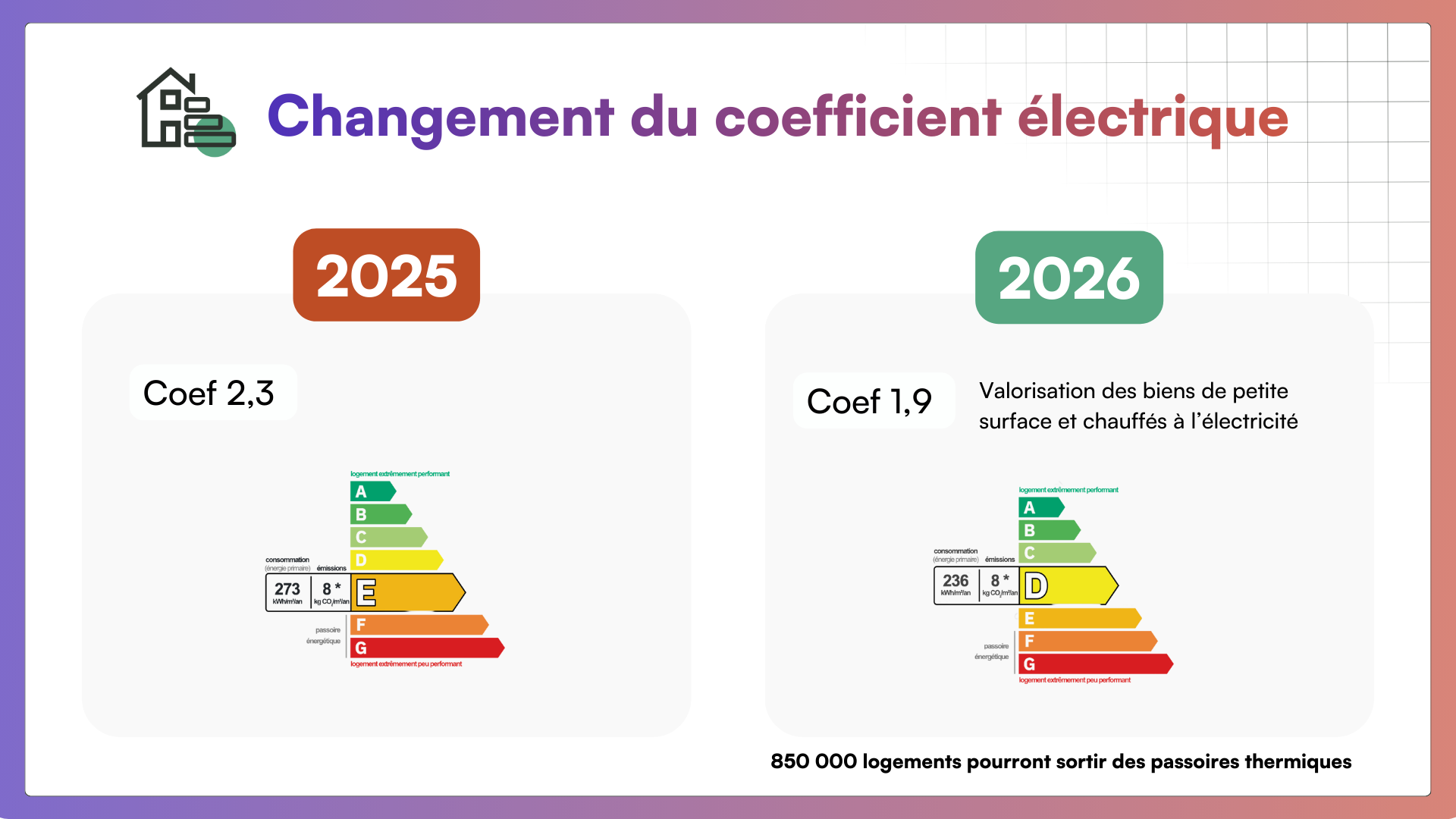
Why? As Margot explained during the conference, the aim is above all to enhance the value of small properties and electrically heated homes.
This will notably allow 850,000 homes to leave the “energy sieve” category.
Although this figure seems impressive, it represents only 2% of the properties on the property market. But it is once again an approach aimed at making the housing stock more energy-efficient and reducing the number of energy sieves.
The regulatory changes under the Climate and Resilience Act
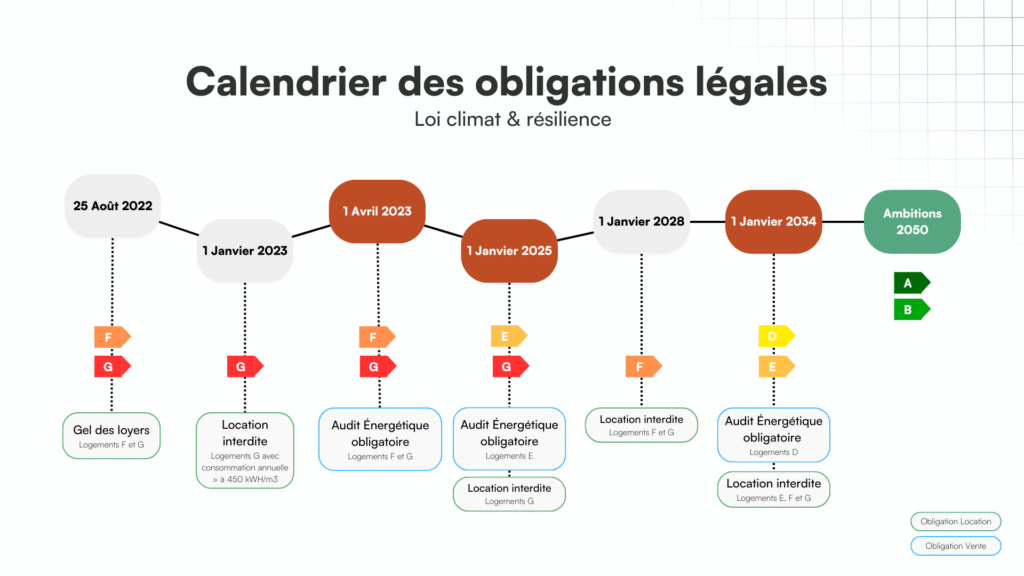
The Climate and Resilience Act introduces a number of regulations aimed at removing energy sieves from the property market. Standards are therefore evolving, and new bans or new regulatory constraints are emerging for the sale and letting of properties.
In 2025, letting is banned for homes rated G. And this ban will gradually extend to homes rated F and E in 2028 and 2034.
The ambition of the Climate and Resilience Act: to have homes rated A or B across the entire housing stock by 2050.
Making the most of your property’s value in 2025
There is no secret: to improve your property’s energy performance, which will earn a better energy class rating and therefore enhance its value, the key is insulation.
There is a real opportunity here! A household of 4 people, consuming “normally”, could have been rated G before 2021. With the new electricity coefficient, the home may move up to E. And what about if the heating system is changed?
This same home, used as an example during the conference, could then move up to energy class B.
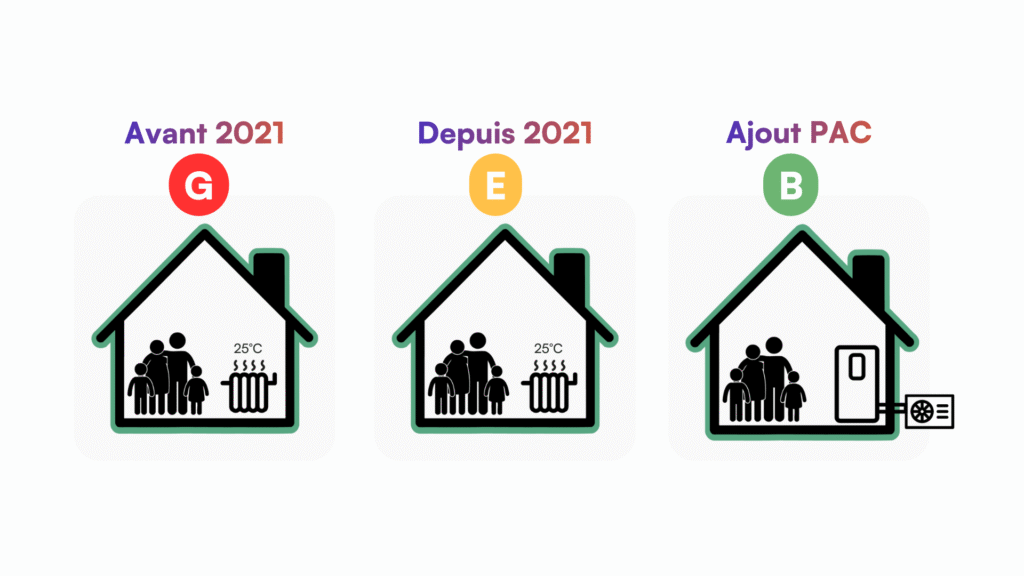
This change made to a property is a first step in the energy renovation of a home.
Wanting to renovate your property to improve its energy performance: yes, but at what cost?
During this conference, Thomas LOUISE discussed the financial support available to help landlords with the energy renovation of a home, as well as the mistakes to avoid!
“In energy renovation, there are two terms: whole-house renovation and single-measure work.” Thomas LOUISE.
Yes to the energy renovation of a home, but not just any which way!
As Thomas LOUISE points out, energy renovation can be carried out in different ways. We generally speak of single-measure renovation when owners decide to change one aspect of the home, through a single renovation action that focuses on one of the building’s components:
- Insulation, or
- Heating, or
- Ventilation, or
- Domestic hot water.
A whole-house renovation covers at least three of these aspects.
With the financial support introduced by the State (MaPrimeRénov’ or éco-PTZ) to help individuals renovate their property, many households have chosen to carry out single-measure works. And that is the real trap…
The mistakes to avoid when carrying out the energy renovation of your property
Insulation is a key factor in a home’s energy performance.
A poorly insulated house will inevitably have high energy consumption. Unfortunately, some households simply tend to oversize their heating system in order to heat their home, but this will not solve the problem.
The best heating system for a home right now? Good insulation.
Insulation is the most common mistake and usually the most costly. A poorly insulated home will keep losing heat, regardless of the heating system installed.
The miracle solution? Insulate your home properly, then size your heating to enjoy a suitable installation and controlled consumption!
A concrete case study
During this conference, the 4 speakers pooled their knowledge and skills to present a concrete case study:
A 1970s detached house in Saint-Contest, 120m², with an EPC rating of E.
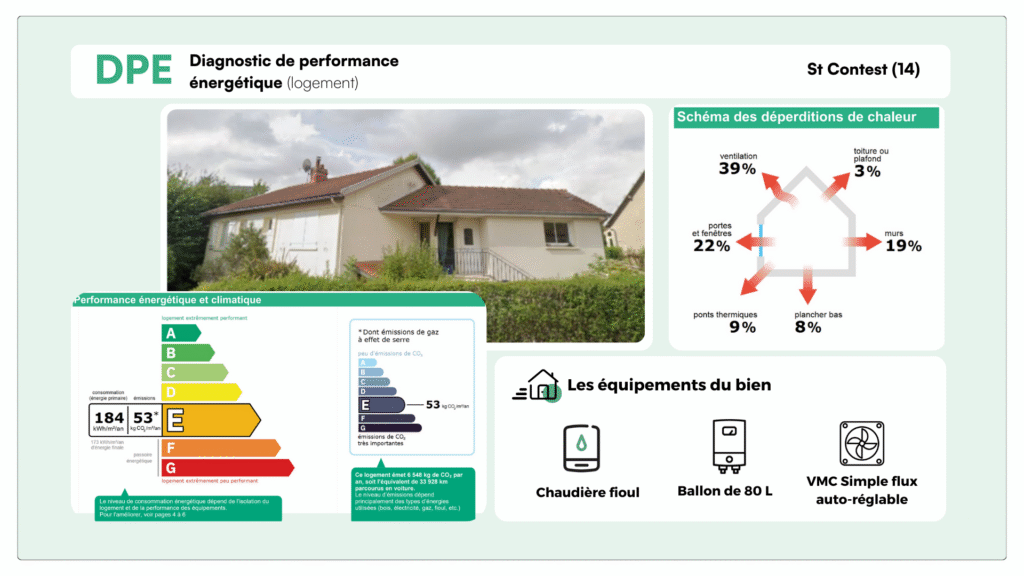
How do you actually go about enhancing your property’s value? Where do you start with the energy renovation of this home? Let’s talk about the projected EPC.
A projected EPC is a survey that proposes a renovation works scenario based on the home’s current EPC results. The aim? To anticipate the property’s energy performance and highlight the works to be carried out. It is also a strong argument for negotiating a building’s price.
So, with the various works scenarios, you can see how the home’s rating evolves.
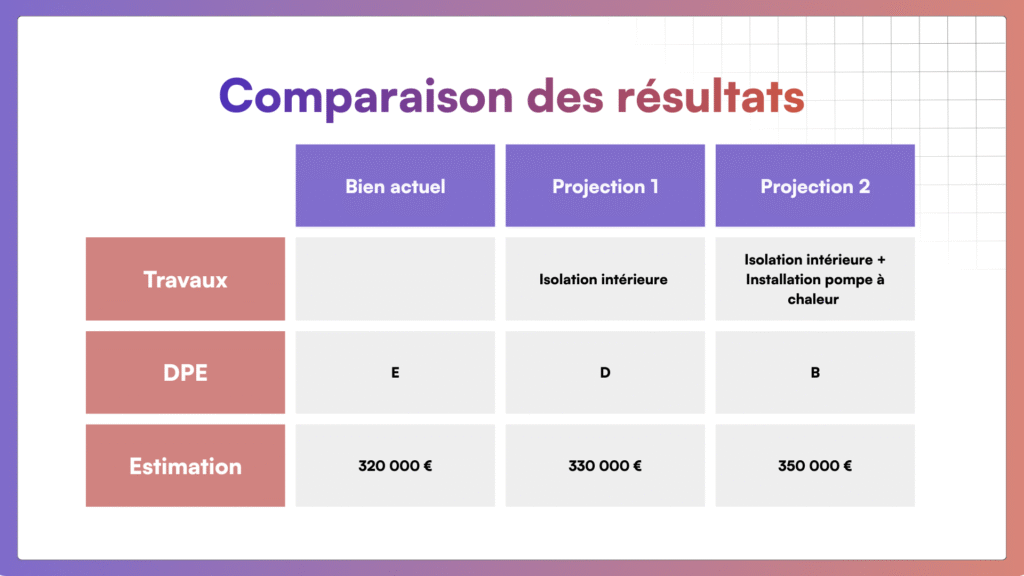
Arthur SERPETTE then returned to the link to be made between the property surveys carried out and a property’s market value.
The results of the projected EPC are now genuine negotiating tools and arguments for enhancing your property’s value on the property market through achievable works scenarios.
It is worth bearing in mind today that the energy renovation of a property offers many advantages:
- Reducing your home’s greenhouse gas emissions,
- Improving the property’s comfort,
- Reducing its energy consumption,
- Enhancing your property’s value for future buyers.
And as a bonus, Arthur SERPETTE reminds us: we also save the planet a little, by reducing our impact on global warming!
Buying a property to renovate: really a good idea?
This Les Bons Biens X RITMO conference was above all about giving participants, and you, the chance to ask this kind of question. Is it wise to buy a home to renovate in 2026?
For our speakers, the answer is clear: it’s a yes.
But with the right support from property professionals: estate agents, auditors, property surveyors, brokers…
All the topics covered are also there to help you see energy renovation as an opportunity rather than an obstacle on the property market.
Our advice? Give yourself every chance with personalised support!
Thanks again to Arthur SERPETTE and Paul TURKOVICS for speaking alongside Margot LADROUE and Thomas LOUISE.
Find Les Bons Biens on LinkedIn, Facebook and Instagram.
And if you haven’t already, follow RITMO on social media!
Related diagnostic
EPC (Energy Performance Certificate)
A property project? Get a quote for your diagnostics.
Related articles
What should I look at on the EPC when buying a property?
Are you sure you haven’t overlooked a detail that could turn your fantastic property opportunity into a financial quagmire? Let’s go over together the key points you shouldn’t miss on an EPC.
Read more →
Understanding the importance of the EPC when buying a property
Buying a property often represents one of the most significant investments for individuals.
Read more →
The ERP: the survey you're bound to forget before your sale
Do you think you've planned everything for your property sale? The EPC has been approved, the asbestos survey is in the bag, the electrical survey too… And yet, chances are you're still missing an essential survey in your DDT (Technical Survey File).
Read more →