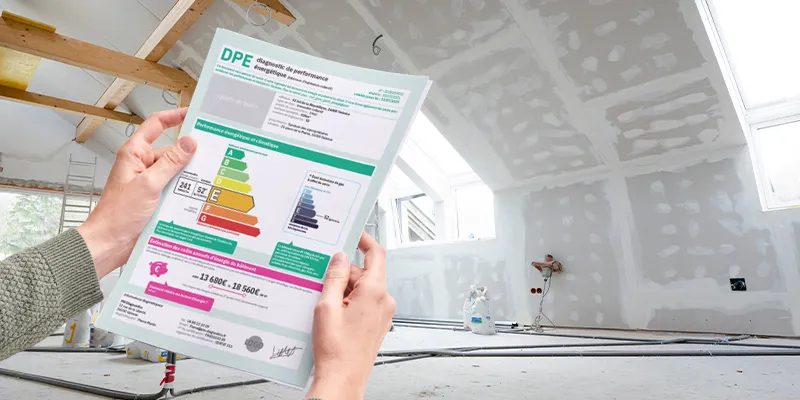
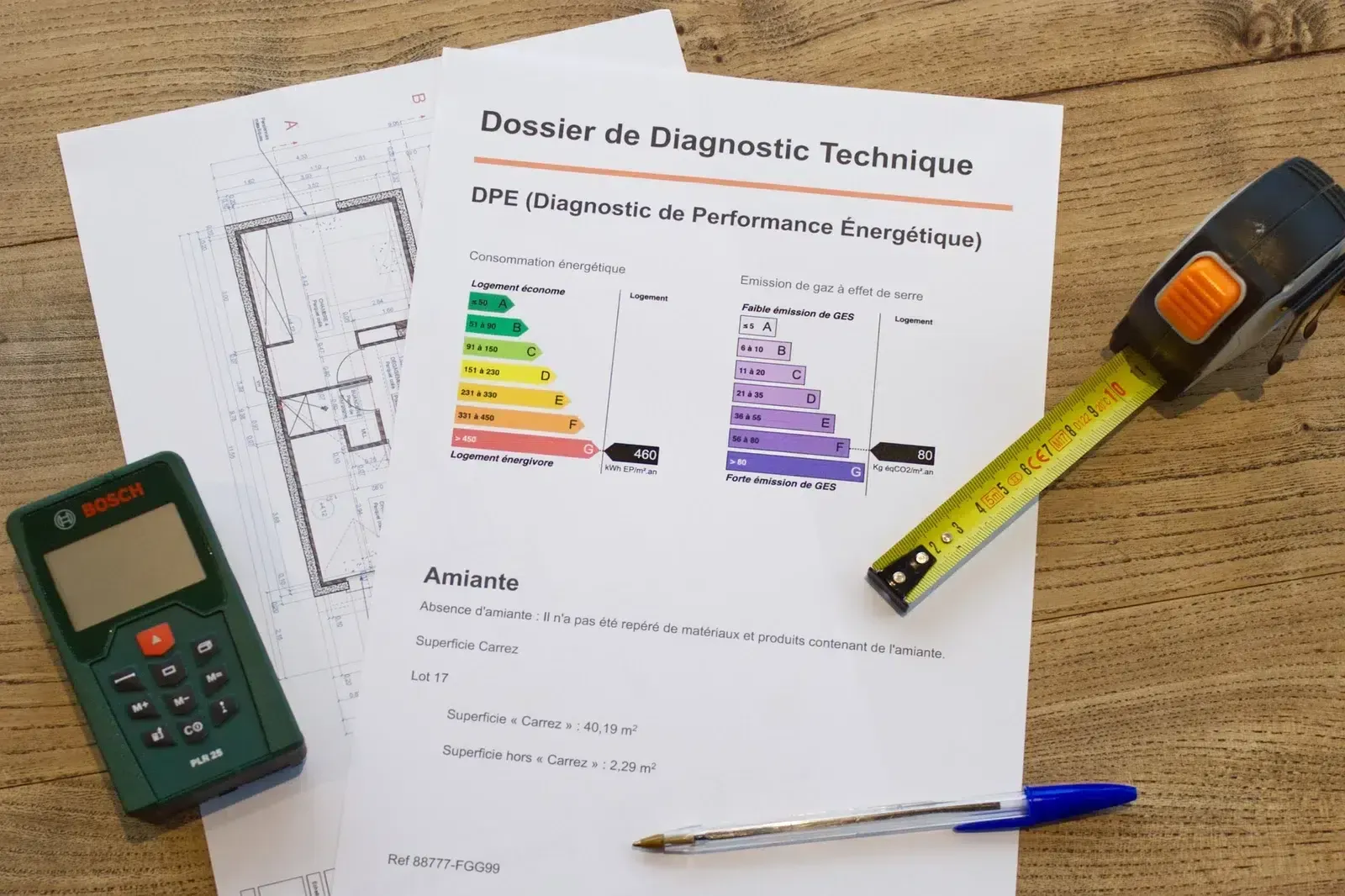
Change in 2026: the EPC electricity coefficient is evolving!
And this change begins with the revision of the electricity coefficient through a new reform coming into effect from 1 January 2026.
In the field of property surveys, 2026 will mark a turning point! With regulatory changes, a reform concerning the calculation of the Energy Performance Certificate (EPC), and an ever more firmly established desire to make the housing stock less energy-hungry, change is on the way!
The RITMODiag consultancy tells you more!
A major reform with a direct impact on the EPC
The change to the EPC electricity coefficient is not just a number changing; it is an adjustment aimed at strengthening a strategy of energy transition and the fight against energy sieves.
There are currently nearly 850,000 electrically heated homes rated F and G, which are therefore categorised as energy sieves. With the revision of the electricity coefficient, they will be able to leave this bracket!
This is a significant issue that will help enhance the value of many properties. For owners, it can also be a game-changer! In the current context, with a letting-ban timetable gradually tightening, this reform may change the works obligations for a home!
First of all, what is the electricity coefficient?
The primary energy coefficient, known as the CEP, is an important indicator in the EPC calculation. It is an electricity conversion coefficient. Without getting into technical terms, this coefficient makes it possible to move from final energy to primary energy:
Final energy is the energy you consume, which appears on your bills and is read off the meter,
Primary energy is the energy needed to produce and deliver electricity to your meter! It takes production and delivery into account.
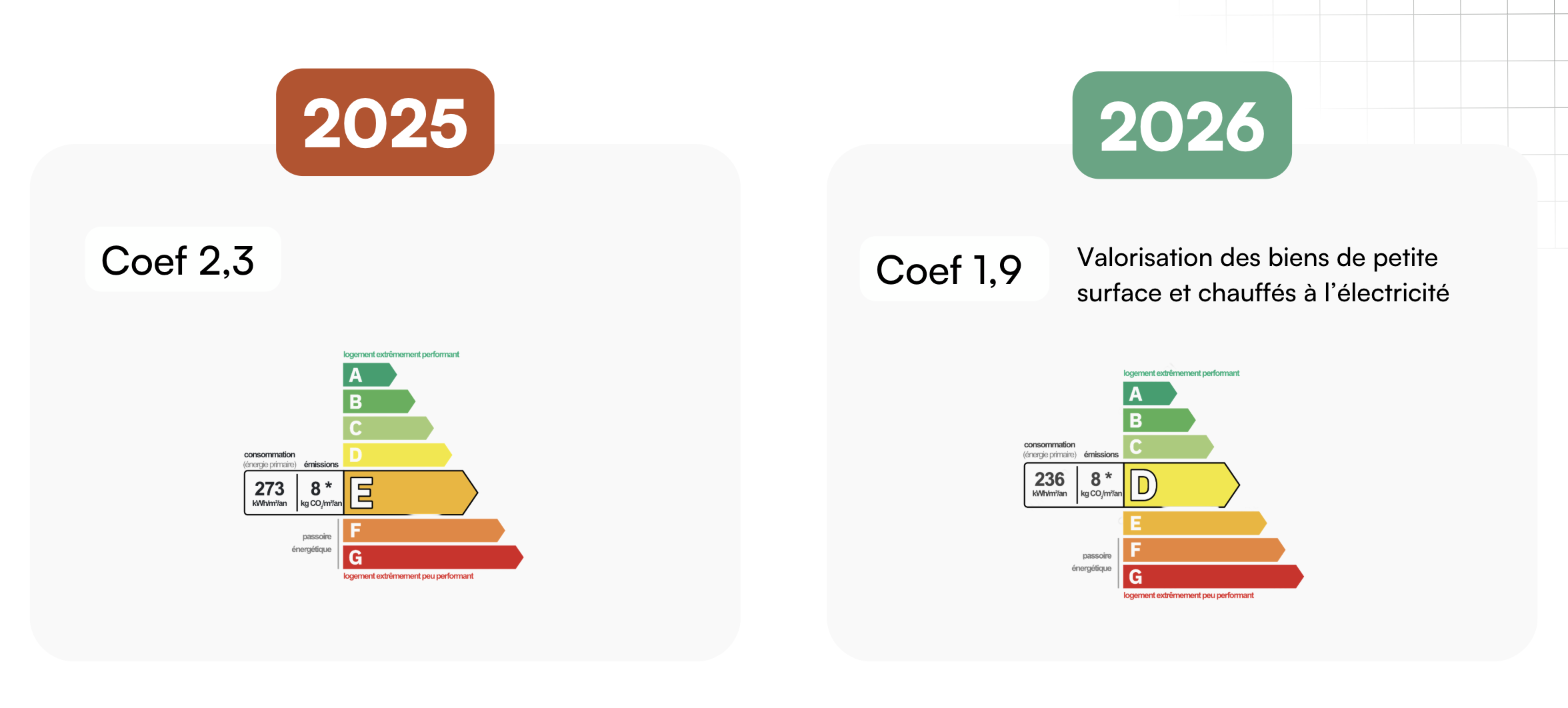
In 2021, during a reform concerning the Energy Performance Certificate, the electricity conversion coefficient, which was 2.58, had already been lowered. The electricity coefficient is currently 2.3. This means that each kWh of electricity consumed in your home equates to 2.3 kWh of primary energy in the EPC calculation.
On 1st January 2026, the electricity coefficient will be lowered to 1.9.
The enactment of the order and the date of application
According to an order dated 13 August 2025 and published on 26 August 2025 in the Journal officiel, this change to the electricity coefficient is now official and will come into effect from 1st January 2026.
By moving from 2.3 to 1.9, France is aligning with the default value recommended by the European directive on energy efficiency (dating from September 2023).
So, in 2026, this calculation method with the new coefficient will automatically apply to all Energy Performance Certificates (EPCs) and energy audits carried out after 1st January.
Many homes are affected by the change! In fact, this reform concerns all properties that use electricity for heating, domestic hot water production, air conditioning, lighting, etc.
Whether homes are 100% electric or mixed, they will all be affected! Although it is of course fully electric homes that will benefit most from this new calculation method, with primary energy consumption falling by around 17%.
The reasons behind this change
The introduction of this reform is part of a strategic vision for the energy transition in France. As we mentioned, the aim is to remove energy sieves from the housing stock.
Moreover, with this new coefficient, France is aligning with the actual energy mix (that is, the breakdown of energy consumption sources: oil, nuclear, etc.) and thereby corrects a certain inequality in the treatment of different energy sources, which until now had penalised electricity.
Finally, this reform reinforces a desire to decarbonise the residential stock, as it encourages the use of low-carbon energy sources such as electricity! By valuing this energy, owners and landlords are encouraged to opt for equipment installations such as heat pumps, for example!
So, what will the impacts of this new reform be?
The impact of this revision on the Energy Performance Certificate
The repositioning of energy labels
By lowering this electricity coefficient and changing the calculation method for EPCs, it is of course homes’ energy ratings that will be affected first and foremost!
This reform can improve the energy rating of some properties and even allow others to leave the energy sieve category (homes rated F or G)! And that can change everything. In the face of the letting-ban timetable, this is very good news for many owners and landlords!
According to the Ministry of the Economy and Finance, of the 4.8 million homes considered energy sieves as of 1st January 2023, 850,000 homes will be able to leave this category with a revised energy label.*
An upcoming advantage for electrically heated homes
For 100% electric homes, this new electricity coefficient will sometimes allow a 17% reduction in their stated primary energy consumption!
As a result, many homes rated E will be able to be upgraded to class D, those rated D could see their energy rating move up to C, and so on. This is a genuine opportunity to enhance your property’s value without having to carry out any works.
As a reminder, under the Climate and Resilience Act, since 2022 the rents of homes rated F and G have been frozen, and letting bans are evolving: homes rated G can no longer be let since 1st January 2025, and this will extend to homes rated F in 2028 and then E in 2024.
What should owners do in the face of this reform?
This reform concerning the electricity coefficient can change a great deal for certain homes. So, as an owner, what should you do? Together, we will answer a few questions that may arise in the face of this change.
Do you need to redo your EPC?
No. (Quite simply.)
Energy Performance Certificates carried out since 1st July 2023 remain valid for a period of 10 years. It is therefore not mandatory to redo your home’s EPC in response to this new reform.
However, bear in mind that your home will not automatically change energy label from 1st January 2026. To benefit from a potential energy upgrade of your property, you can carry out a new EPC or download an official certificate of the new EPC label from the ADEME website.
If my energy label improves, do my overall label and energy class improve too?
Not necessarily. Indeed, even if your energy label goes down, the greenhouse gas label will not change. So in some cases, the overall label will not improve.
But if the drop in energy consumption is sufficient, the home’s energy label may improve and move up a class, or even two in rare cases, thereby improving the EPC rating.
Note that this reform will not cause a home’s label to be downgraded!
Does a lower energy label mean my bills will go down?
No. This new calculation method does not change your actual electricity consumption in any way, and therefore does not affect your bills.
This reform aims to meet decarbonisation targets and to promote the energy transition of the housing stock.
What works should be prioritised despite the reduction in the electricity coefficient?
If your home’s label remains unchanged despite this reform, you can still opt for energy renovation works. Our consultancy makes sure to support and advise its clients as best it can, according to their needs.
This change to the electricity coefficient for the Energy Performance Certificate is a technical adjustment, but one that will influence the assessment of future EPCs and enable many homes to be upgraded.
The aim remains to improve the energy efficiency of the French housing stock and to eliminate energy sieves by rewarding comfortable, economical and environmentally friendly homes.
Contact RITMODiag to arrange an appointment with our teams!
To keep up with changes in energy performance and gain a clearer picture of your energy renovation, you can get in touch with our consultancy.
Our surveyors and auditors are here to help you! Don’t wait to get ahead of regulatory changes, and enhance the value of your property assets today!
Répondez à 4 questions pour connaître la liste exacte des diagnostics à réaliser pour votre bien.
Diagnostics à prévoir
Estimation indicative selon la réglementation en vigueur. La liste définitive est confirmée par nos diagnostiqueurs certifiés selon les spécificités de votre bien.