
How to move your EPC from G to E
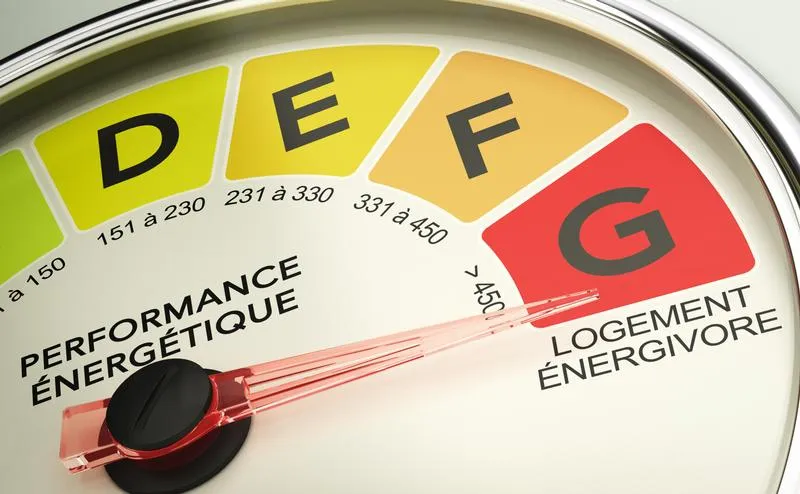
Has your home just undergone an Energy Performance Certificate and has your assessor produced an analysis rating it G? It is time to put renovation measures in place to improve your home's rating.
Has your home just undergone an Energy Performance Certificate and has your assessor produced an analysis rating it G? It is time to put renovation measures in place to improve your home's rating.
The consequences of your home being rated G
If the analysis of your home's energy performance shows primary energy consumption of more than 450 kWh/year, this has a negative impact on your property.
- High energy bills : a home rated G is very energy-hungry, which translates into high electricity and gas bills.
- Thermal discomfort : a home rated G is often poorly insulated, leading to significant heat loss in winter and overheating in summer. Occupants may therefore face uncomfortable indoor temperatures.
- High greenhouse gas emissions : a home rated G contributes heavily to greenhouse gas emissions, which has a negative impact on the environment.
- A loss of value on resale : a home rated G is less attractive on the property market, which can lead to a loss of value on resale.
- The inability to rent out your property. Under the Climate and Resilience Act, it is now prohibited to rent out a home rated G in France.
In addition, if your property is a single-family home or a building of which you are the sole owner, you are required to carry out an energy audit before signing the deed of sale. These audits will reveal the works needed to achieve an optimal renovation of your home's performance. Your property's price will be affected by these factors.
How to improve your energy label from G to E?
You are determined to improve your home's label to reach an E rating. There is no way around it: you will have to carry out some works.
Carry out insulation works
One of the first things to improve is your home's insulation. Consider the options:
- Insulate the loft
- Insulate the floor
- Check the joinery, such as doors and windows
- Improve the insulation of the walls.
Did you know? You may be eligible for grants to carry out renovation and insulation works on your property. Don't hesitate to seek expert help to review your situation and identify all the grants you may be entitled to.
Replace the heating system
When it comes to the heating system, it is always a little paradoxical…
A GAS heating system is often preferred over an electric one to achieve a good rating on your EPC.
Gas heating vs electric heating: which is best for your EPC
It is true that gas is a fossil fuel and, given current events, continuing to use an energy source that is scarce in France and often imported from Russia is all the more controversial.
It is therefore up to you to choose whichever of the two systems you prefer. Don't forget that installing a gas heating system can be far more expensive in terms of the works involved.
For those who prefer electric heating for other reasons, don't worry. Electric heating remains highly effective for improving your home's energy performance rating.
Consider a heat pump
A heat pump, where one can be installed, can be a good alternative. Working by capturing heat from the outside air, it offers a renewable energy alternative that can considerably improve your EPC.
This solution is nevertheless recommended more for individual homes with a garden, since the pump must, in principle, be installed outside.
Electric convector heaters
In the case of a flat with an electric heating system, make sure you have efficient convector heaters. The most recommended are inertia convectors or radiant panels.
Your home's ventilation
Improve air quality with good air circulation throughout your home. Poor ventilation causes problems that can be costly in the long run and can make your home unfit to live in.
Several ventilation solutions are available on the market. One of the most effective at present is the dual-flow VMC (controlled mechanical ventilation).
However, you can achieve more than acceptable performance with a humidity-controlled single-flow VMC or a self-regulating single-flow VMC.
Change your bulbs for better lighting in your home
It's that simple: switch to LED bulbs in your home.
To reduce this consumption, you can replace conventional bulbs with LED bulbs, which use far less energy.
Go further by improving renewable energy sources
Have you considered installing solar panels
Installing solar panels can help improve a property's energy performance and therefore its Energy Performance Certificate (EPC).
The impact of installing solar panels on the EPC depends on several factors such as the size of the installation, the orientation and tilt of the panels, and the geographical location of the building. All these points should be assessed and discussed with the professional in charge of installing your solar panels.
In short, you have many possible actions to influence your Energy Performance Certificate rating. It is essential to prepare for this, as energy sieves (homes with a G label) have recently been banned from being rented out.
Many grants are available to support your renovation projects and allow you to benefit from state aid to carry out the works. Remember to ask for RGE-certified tradespeople.
The main effective renovation works to improve your EPC from G to E are:
- Insulation (walls and joinery)
- Improving the heating system
- Upgrading the electrical systems
- Ventilation and air circulation
Have you considered RITMO-Diag for your EPC?
We support our clients in analysing the energy performance of their homes. Feel free to estimate the price of your EPC directly on our website or to contact us with your requirements.
Related diagnostic
EPC (Energy Performance Certificate)
A property project? Get a quote for your diagnostics.
Related articles
Electricity coefficient in the EPC: what the shift from 1.9 to 1.7 will change in 2027
The electricity coefficient used in the French energy performance certificate (EPC) will drop from 1.9 to 1.7 on 1 January 2027. Here is an overview of the homes affected, the possible impact on the EPC rating and the steps to anticipate.
Read more →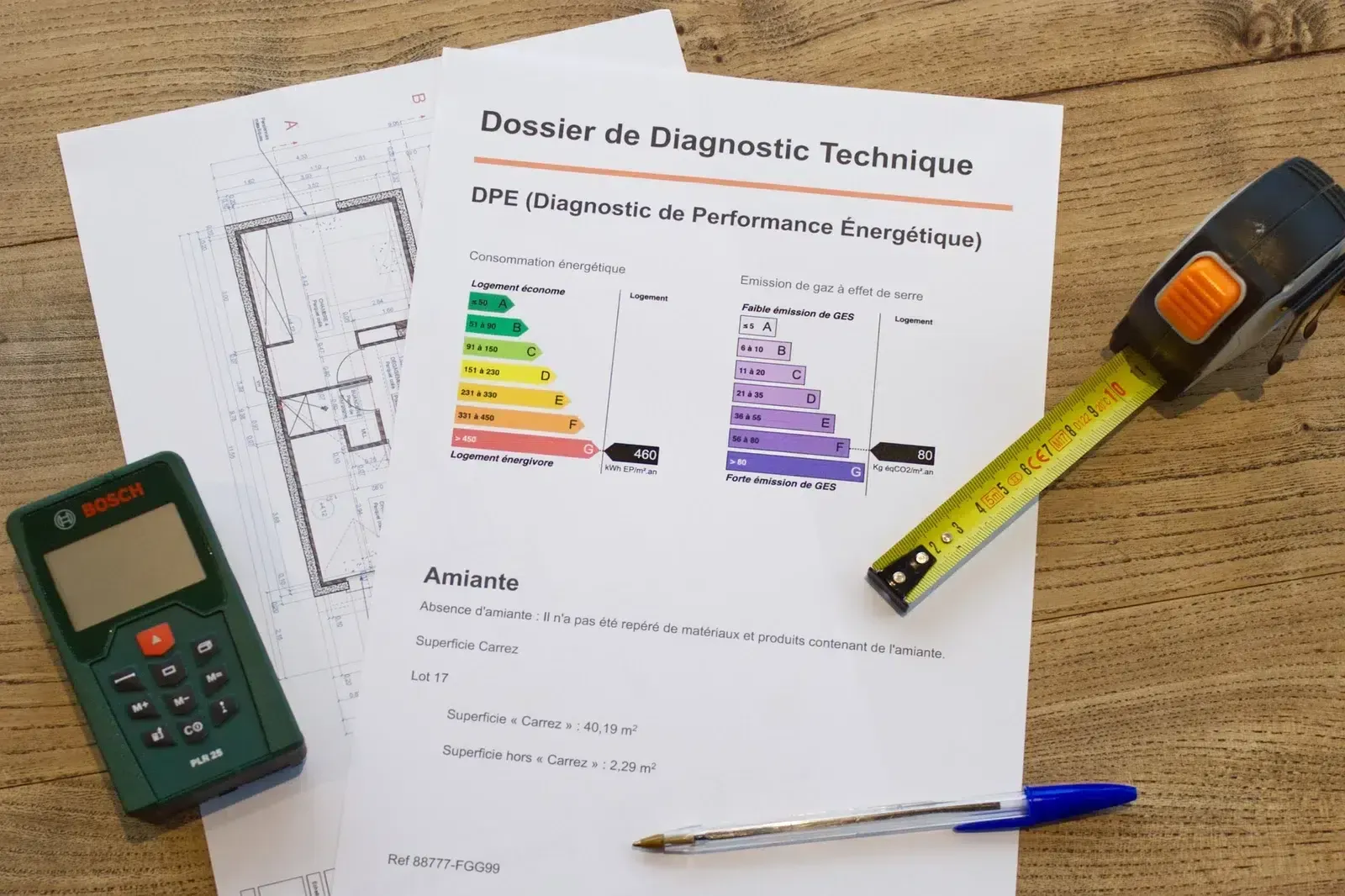
I use little energy but have a poor EPC – how is that possible?
Unfortunately, you are not the only ones facing this situation. To better understand this paradox between consumption and EPC rating, RITMODiag explains everything!
Read more →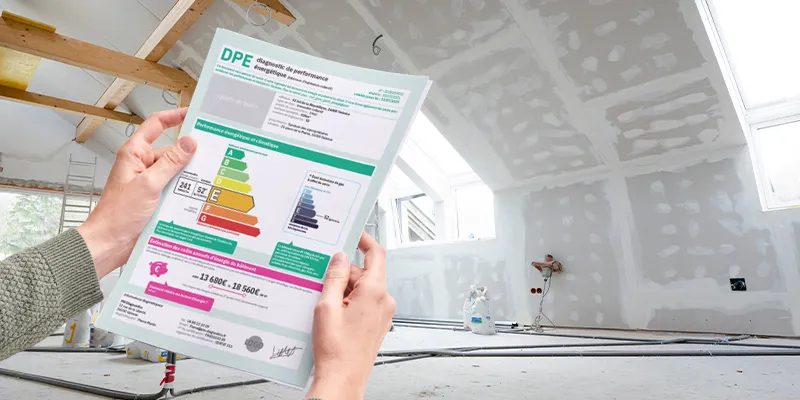
Change in 2026: the EPC electricity coefficient is evolving!
And this change begins with the revision of the electricity coefficient through a new reform coming into effect from 1 January 2026.
Read more →