
Asbestos survey: obligations, health risks and the cost of asbestos removal in 2026
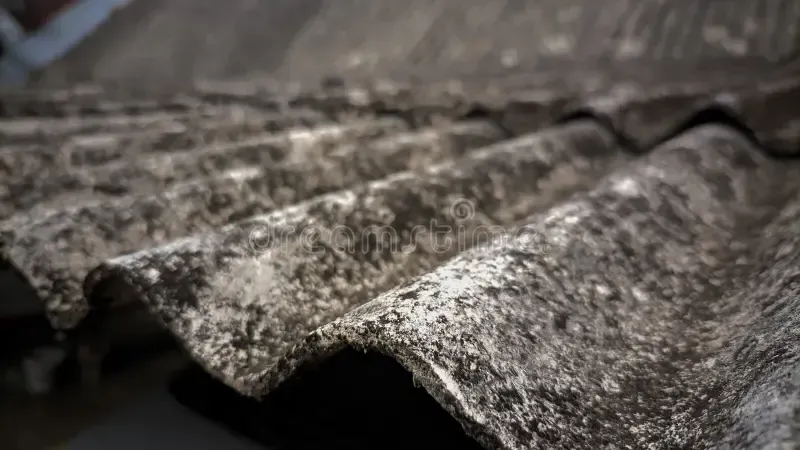
Mandatory asbestos survey: who is concerned, what price, what risks? Regulations, cost of asbestos removal and expert advice in Normandy. A complete guide.
Asbestos remains the leading cause of work-related deaths in France. Every year, between 3,000 and 4,000 people die from an illness caused by exposure to this material, banned since 1997 but still present in millions of buildings. If you own a property built before July 1997, the asbestos survey directly concerns you - whether for a sale, a letting, works or simply to protect the occupants.
At RITMODiag, our certified surveyors work daily on Norman properties where asbestos is still very much present: vinyl-asbestos floor tiles, fibre cement roof sheets, chimney flues, tile adhesives, and so on. This complete guide explains your obligations, the real risks, and what a survey - and any subsequent asbestos removal - actually costs.
What is asbestos and why is it so dangerous?
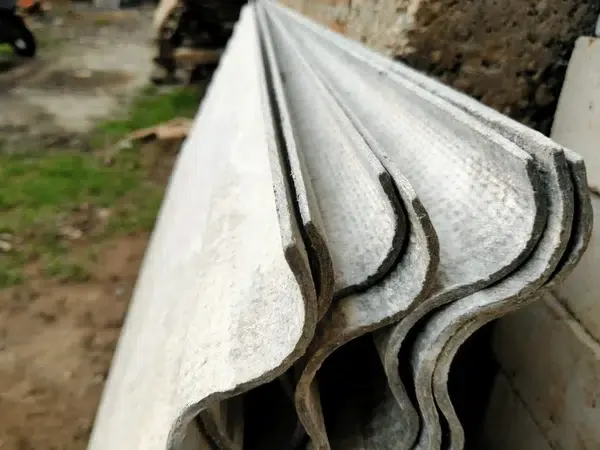
Asbestos refers to a group of natural fibrous minerals (chrysotile, amosite, crocidolite, etc.) that were massively used in construction between the 1950s and 1997 for their remarkable properties: fire resistance, thermal and acoustic insulation, and mechanical strength.
A silent killer with alarming figures
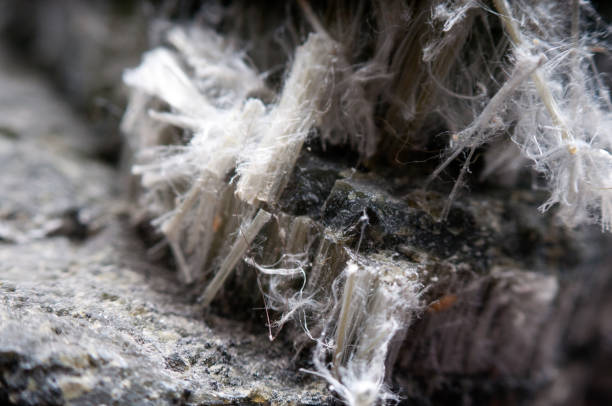
The problem is that asbestos is a proven carcinogen. When the materials that contain it deteriorate or are handled, they release microscopic fibres (400 to 500 times finer than a hair) that penetrate deep into the lungs.
The figures speak for themselves:
- 3,000 to 4,000 deaths per year in France linked to asbestos (source: Santé publique France)
- Pleural mesothelioma: around 1,100 new cases per year, of which 80% are linked to occupational exposure to asbestos
- Lung cancers attributable to asbestos: estimated at between 1,500 and 2,500 cases/year
- Asbestosis (pulmonary fibrosis): a chronic disabling disease, recognised as an occupational disease
- Latency period: 20 to 40 years between exposure and the onset of the disease
It is this latency period that makes asbestos particularly treacherous: you can live for decades in an asbestos-containing home without symptoms, all while accumulating an exposure that will prove fatal.
Where is asbestos found in a building?
In Normandy, where the stock of older properties is particularly large - more than 60% of homes in Calvados were built before 1990 - the probability of finding asbestos is high. Here are the materials most frequently concerned:
| Location | Typical materials | Frequency |
|---|---|---|
| Roof | Corrugated fibre cement sheets, artificial slates | Very frequent |
| Floors | Vinyl-asbestos tiles (30×30 cm), black adhesives | Very frequent |
| Walls/partitions | Fibre cement sheets, sprayed renders | Frequent |
| Pipework | Asbestos-cement conduits | Frequent |
| Insulation | Sprayed coatings, thermal lagging | Frequent (building with a heating network) |
| Suspended ceilings | Asbestos ceiling tiles | Frequent |
| Equipment | Boiler seals, sealing braids | Common |
Crucial point: an asbestos-containing material in good condition and undamaged does not present an immediate danger. It is when it is drilled, sanded, cut or when it deteriorates naturally that the fibres become dangerous.
The 4 types of asbestos survey: which one concerns you?
Contrary to what many people think, there is no single “one-size-fits-all” asbestos survey. The regulations distinguish four situations, each with its own scope of inspection.
1. The pre-sale asbestos survey (DAPP → asbestos statement)
Who is concerned? Any owner selling a property whose building permit predates 1 July 1997.
What is checked: The surveyor looks for asbestos in the materials and products of list A (sprayed coatings, thermal lagging, suspended ceilings) and list B (walls, floors, conduits, external elements) in the private areas.
Validity: Unlimited if the survey is negative (absence of asbestos). If asbestos is detected, a periodic inspection may be required depending on the level of degradation.
Legal obligation: The report must be appended to the technical survey file (DDT) handed over to the buyer. Without this document, the sale can be cancelled or the seller sued for a hidden defect.
2. The Asbestos Technical File (DTA)
Who is concerned? Owners of buildings constructed before 1 July 1997 for use other than housing (offices, shops, public buildings) and the common areas of co-ownerships.
What is checked: Materials from lists A and B. The DTA is a living document that must be kept up to date and made available to occupants, companies working on the building, and the labour inspectorate.
Good to know: In a co-ownership, it is the managing agent who is responsible for the DTA for the common areas. A subject often neglected in older Norman co-ownerships - we will come back to this in our next article on the collective EPC in co-ownership.
3. The pre-works asbestos inspection (RAAT)
Who is concerned? Any project owner or property owner having works carried out in a building constructed before 1 July 1997.
This is the most comprehensive and most demanding survey. Introduced by Decree no. 2017-899 of 9 May 2017 and made fully applicable since 19 July 2019 with the NF X 46-020 standard, it requires a targeted inspection of the exact zone of the works, with destructive sampling if necessary.
Warning: This survey goes well beyond a simple visual inspection. The surveyor may need to drill, scrape or cut materials to check for the presence of asbestos in the underlying layers. This is why it is more costly.
Penalty for absence: The client who has works carried out without a RAAT is liable to criminal penalties (a fine of €9,000 for a natural person, €45,000 for a legal entity) and incurs civil liability in the event of workers being exposed.
4. The pre-demolition asbestos inspection (RAAD)
Who is concerned? Any owner having a building constructed before 1 July 1997 demolished.
This is the most exhaustive inspection: all the materials and products of the building are inspected, including those normally inaccessible (behind partitions, under coverings, within the structures).
How much does an asbestos survey cost?
Prices vary according to the type of inspection, the surface area of the property and its complexity. Here are the ranges observed in Normandy:
Price of the asbestos survey
| Type of survey | Flat (T2-T3) | Detached house | Building/Co-ownership |
|---|---|---|---|
| Asbestos statement (sale) | €80 – €150 | €100 – €200 | €200 – €500 |
| DTA (common areas) | – | – | €500 – €2,000 |
| RAAT (pre-works) | €150 – €400 | €200 – €800 | Variable depending on scope |
| RAAD (pre-demolition) | €300 – €600 | €400 – €1,500 | €1,000 – €5,000+ |
Please note: These prices do not include any laboratory analyses (fibre counting), charged at up to €80. A reliable surveyor will systematically send the samples to a COFRAC-accredited laboratory rather than rely on a simple visual examination. We work in partnership with Eurofins, a reliable and recognised laboratory. Thanks to this partnership, we offer each sample at €65 incl. VAT, on average cheaper than our competitors.
And if asbestos is found? The cost of asbestos removal
This is the question that worries owners the most. Let's be clear: finding asbestos does not necessarily mean immediate works. It all depends on the level of degradation observed by the surveyor (levels 1, 2 or 3, as detailed in the Public Health Code, articles R1334-14 to R1334-29).
When asbestos removal is required, here are the rough orders of magnitude:
| Type of works | Indicative price |
|---|---|
| Removal of vinyl-asbestos floor tiles | €25 – €60 / m² |
| Removal of fibre cement sheets (roof) | €30 – €70 / m² |
| Removal of sprayed coatings/thermal lagging | €100 – €300 / m² |
| Encapsulation (encasing) | €15 – €40 / m² |
| Treatment of asbestos-cement conduits | €50 – €150 / linear metre |
Concrete example - typical Norman house (100 m²):
- Fibre cement roof to be replaced: €3,000 – €7,000 (asbestos removal) + cost of the new roof covering
- Vinyl-asbestos tile floor (50 m²): €1,250 – €3,000
- Total asbestos removal alone: €4,250 – €10,000 (excluding the refitting of new materials)
These amounts may seem high, but they must be weighed against the legal risks (criminal liability in the event of exposing third parties) and the health risks (an incomparable human cost).
The 3 levels of action after a positive survey
When the surveyor identifies materials containing asbestos, they assess their state of conservation and classify each zone into three levels:
List A (sprayed coatings, thermal lagging, suspended ceilings)
- Level 1: Materials in good condition → periodic monitoring every 3 years by a certified surveyor
- Level 2: Visible degradation → mandatory dust measurement by a COFRAC-accredited body. If the result exceeds 5 fibres per litre of air, works are required
- Level 3: Significant degradation → removal or encapsulation works mandatory within 36 months. Precautionary measures within 2 months (isolation of the zone, sheeting)
List B (walls, floors, conduits, external elements)
- Level 1: Periodic assessment recommended
- Level 2: Targeted corrective action (replacement or covering of the degraded elements only)
- Level 3: Overall corrective action across the entire zone concerned
Important: In the event of level 3, the owner must, within 2 months, submit to the prefect the precautionary measures implemented, then the timetable for the definitive works within 12 months.
Norman specificities: a property stock that is particularly exposed
Normandy has several characteristics that make the asbestos issue more acute than elsewhere:
An older building stock that is massively affected
According to INSEE data, around 65% of the housing stock in Normandy was built before 1990, a significant proportion of it before 1975 - the period of massive asbestos use in construction. Calvados, Manche and Orne have many detached houses with fibre cement roofs, an extremely widespread material in Norman rural and peri-urban construction.
Agricultural sheds: a blind spot
In rural Normandy, agricultural buildings (sheds, cowsheds, barns) built between 1960 and 1997 are very often covered with corrugated asbestos-containing fibre cement sheets. These buildings are sometimes converted into homes or business premises without the asbestos survey being carried out. A situation that is risky both in health and legal terms.
The collective housing of Caen
In Caen and its conurbation, many collective buildings from the 1950s-1970s (the post-war reconstruction period) contain asbestos in the common areas: service ducts, suspended ceilings, expansion joints. The co-ownerships concerned must absolutely have an up-to-date DTA. Which is far from always the case.
If you are a co-owner and your managing agent has never mentioned the DTA, that is a warning sign. Don't hesitate to raise the question at the general meeting. Also discover our article on surveys in co-ownership to understand all your obligations.
How does an asbestos survey take place?
Understanding how a survey unfolds allows you to prepare better for it and to assess the quality of the work carried out.
Step 1: Documentary study
The surveyor consults the building's plans, the building permit, any previous reports and the existing DTA.
Step 2: Visual inspection
A systematic visit of all accessible rooms and spaces. The surveyor identifies the materials likely to contain asbestos based on their appearance, their period of installation and their location.
Step 3: Sampling and analysis
When doubt remains, the surveyor takes samples (a few cubic centimetres) sent to a COFRAC-accredited laboratory. The result generally arrives within 3 to 5 working days.
Step 4: Assessment of the state of conservation
For each material containing asbestos, the surveyor assesses the level of degradation and determines the level of action (1, 2 or 3).
Step 5: Drafting the report
The report details each material identified, its location, its condition, the recommended level of action and the measures to be taken. It is sent by registered letter with acknowledgement of receipt.
Average duration: 1 to 2 hours for a flat, 2 to 4 hours for a detached house, half a day or more for a collective building.
What you need to do now
Do you own a property built before 1997? Here is your checklist:
- Are you selling? The asbestos survey (asbestos statement) is mandatory and must be included in the DDT. Contact RITMODiag for a quick quote.
- Are you letting? The tenant can ask to consult the DAPP (private areas asbestos file). It is best to have it up to date.
- Are you carrying out works? The pre-works inspection (RAAT) has been mandatory since 2019. Without this document, your tradesperson is entitled to refuse the job. And they are right to.
- Are you a co-owner? Check that the DTA for the common areas exists and is up to date. Challenge your managing agent if necessary.
- Does your survey date from before 2013? The standards have changed. An old survey may not cover all the materials required today. A new inspection is recommended.
Do not take asbestos lightly. Behind the figures and the regulations, there is a major public health issue. A survey carried out by a certified professional is the first step to protecting your family, your tenants and preserving the value of your property.
Need an asbestos survey in Normandy? Our certified surveyors work in Caen, Le Havre, Bayeux, Saint-Lô and throughout the region. Request your free quote →
Sources: Service-public.fr, Public Health Code (R1334-14 to R1334-29), Santé publique France (National mesothelioma surveillance programme), INRS, Decree no. 2017-899 of 9 May 2017, INSEE.
Related diagnostic
Asbestos
A property project? Get a quote for your diagnostics.
Related articles
Electricity coefficient in the EPC: what the shift from 1.9 to 1.7 will change in 2027
The electricity coefficient used in the French energy performance certificate (EPC) will drop from 1.9 to 1.7 on 1 January 2027. Here is an overview of the homes affected, the possible impact on the EPC rating and the steps to anticipate.
Read more →
Heatwave: Immediate and lasting tips to keep your home cool
The thermometer is going haywire, the blazing sun beats down on the rooftops and the air becomes oppressive… The heatwave is well and truly here! Faced with heatwaves that are increasingly frequent and intense, turning your home into a haven of coolness has become more than an absolute priority.
Read more →
I use little energy but have a poor EPC – how is that possible?
Unfortunately, you are not the only ones facing this situation. To better understand this paradox between consumption and EPC rating, RITMODiag explains everything!
Read more →