Political instability and the property market: a bad match we don't want to see last
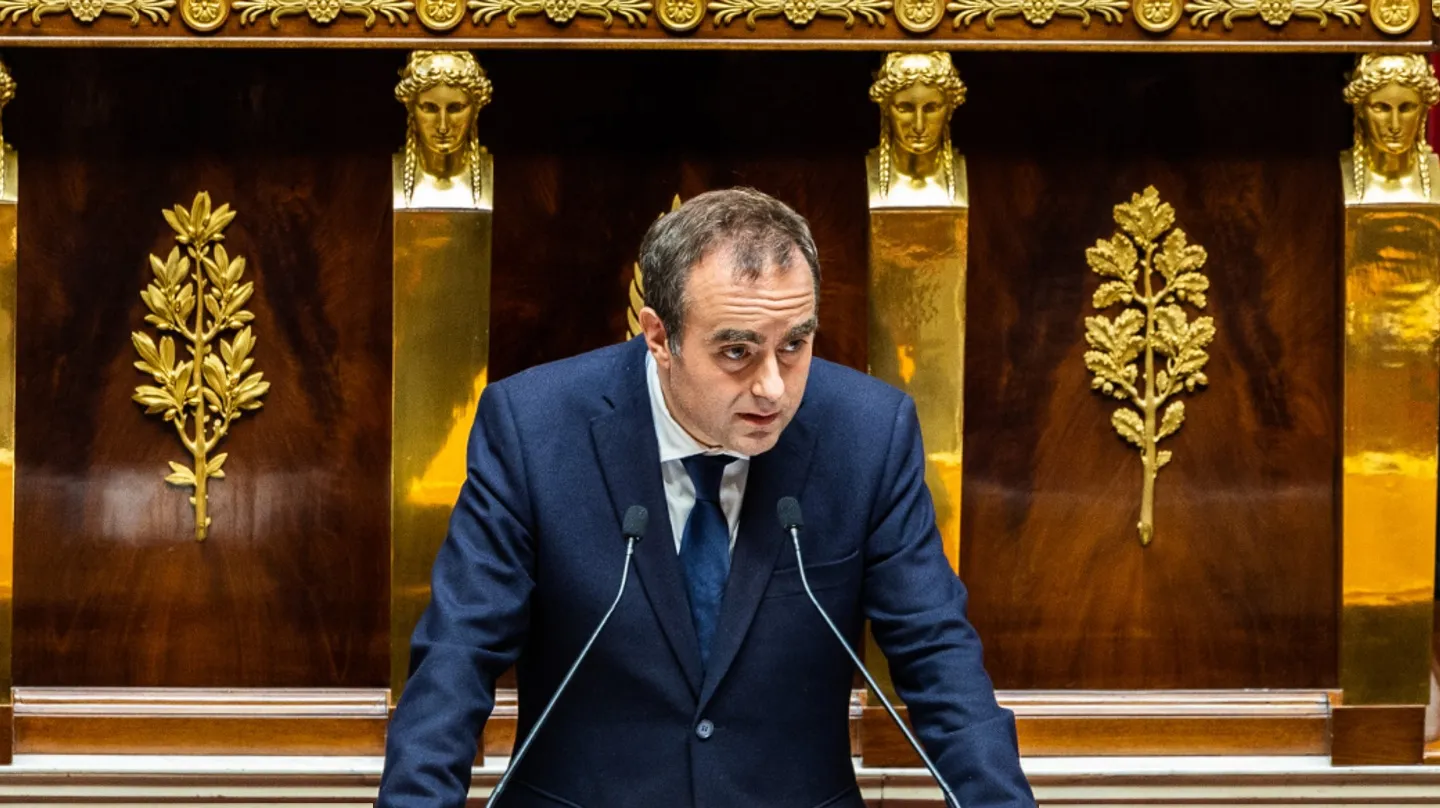
For several months now, France has been going through a period of political tension and a persistent economic crisis. Between numerous government reshuffles, heated parliamentary debates and real uncertainty over the budget, the economic and political climate is encouraging a more cau
Political instability can have repercussions on the economy. Household confidence is undermined, investors and the various market players become hesitant… And the property sector is not spared from all this turbulence!
Indeed, between the constant evolution of regulatory obligations, the uncertainty surrounding energy renovation support schemes and the concern of owners… How does this political instability influence the property market and, by extension, the property survey sector?
A tense political climate weighing on the economy
French politics has been very turbulent in recent months. We have seen a succession of ministerial reshuffles (ministerial changes have multiplied), palpable parliamentary tensions and endless budget debates.
All these ingredients, well mixed together, create a climate of uncertainty that is becoming widespread!
And all this political uncertainty has real repercussions: the ministerial merry-go-round is leading to a paralysis of government action: the 2026 budget remains uncertain, and investors do not trust an unpredictable environment. For their part, individuals and households remain on the sidelines, cautious. These factors reflect a weakened economic situation!
As proof: this was confirmed on 17 October: France's sovereign rating, issued by various rating agencies, was downgraded. The double A is gone; we have moved from AA- to A+. What does this mean? That France is no longer seen as a country of financial reliability and that it no longer has the same capacity to repay its debts.
Political uncertainty weighs on the economy, investment and growth in our country. And this uncertainty echoes across the financial and property sectors.
But where does this somewhat chaotic situation come from?
It should be borne in mind that in 2025, we also went through a summer crisis whose effects are still being felt. And amid this shifting political context and a global financial crisis, lending rates did not soar. This raises a question: why did rates not soar?
Well, it is very simple: the banks needed volume! They needed you and could not afford to deal a heavy blow to home ownership. But this approach is only temporary. For 2026, lending conditions will probably tighten and rates may gradually rise.
As we have seen, the combination of political and economic factors has created a cocktail that is particularly unfavourable to the dynamism of the property market.
Summer crisis and reshuffles: a summer that did not rhyme with stability
The summer of 2025 will be remembered as a period of major political instability. The dissolution of the National Assembly and the early legislative elections brought real instability and a sense of uncertainty for individuals and professionals alike.
With election results that produced no clear majority, the State found itself facing decision-making paralysis, both in terms of the budget vote and the debates on housing.
This whole summer crisis had a real impact on the property market, with a marked drop in transactions during this period, even though the start of 2025 had looked encouraging with an 8% increase compared with the previous year.
But the consequences extend beyond the summer! Political indecision on the budget, taxation and housing has not helped people plan ahead and casts a shadow over future direction. Selling times are therefore longer, buyers negotiate harder on prices and wait for government stability before making a decision.
Property professionals and players have to cope with this uncertainty in the face of increasingly hesitant individuals who prefer to wait for clearer signals from the State and greater stability.
A weakened property market and cracking confidence
Political instability can affect confidence in the property market.
Political instability undermines the confidence of investors and households. And this confidence is the foundation of the property sector. So, at the end of 2025, we find potential buyers wondering whether it is really the right time to invest, and sellers hesitating to put their property on the market as a strategic decision.
The property market is facing an imbalance between supply and demand! We know that difficulties in accessing credit may have increased, that banks may be more demanding about applications and that negotiations are more intense than ever.
The result of all this? Sales being postponed, property projects on hold and individuals who can no longer obtain the financing they need for their project.
Successive political and regulatory changes are slowing the market and reinforcing fears and caution.
Individuals and professionals are asking the same question: why commit to projects when tax rules, support schemes or energy performance regulations may still change in the coming months?
The transformation of the housing stock and energy renovation ambitions at risk?
Since the Climate and Resilience Act, enacted in 2021, the energy renovation of homes has become a major issue for the property market, particularly in order to meet national and European targets.
This raises a question: is the political crisis holding back the climate objectives for buildings? With the budget debates, the future of the support made available to households to begin renovating their homes may be jeopardised.
Although the timetable for banning energy sieves and homes that lose too much heat theoretically remains in force for now.
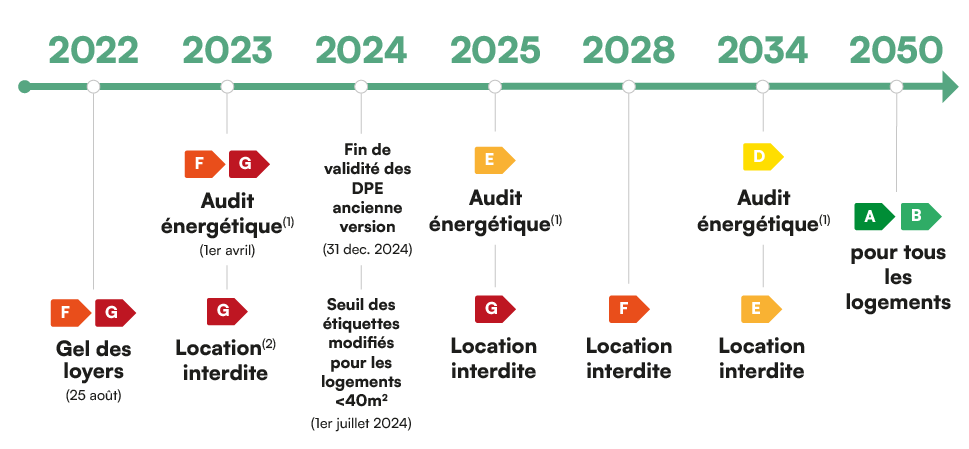
As this political context casts doubt over the future direction for housing and energy renovation (potential cuts to budgets or the postponement of certain measures), all of this has direct repercussions on energy performance certificates (EPCs) and energy audits.
Yet these are essential for identifying the work needed and for enabling households to benefit from renovation support.
Property surveys and energy audits: the collateral victims of this uncertain climate
In the midst of a purchasing-power crisis, property surveys are increasingly seen as an additional burden by owners. It is worth remembering the legal framework, which requires certain surveys to be provided before any property transaction. But faced with a flagging property market, and sales that are uncertain or take a long time, owners are taking their time.
Property regulation is also on hold. How can we blame landlords for being hesitant about diving into the deep end of energy renovation? When support is uncertain and there is regulatory instability, it leaves some owners caught between anticipating and waiting.
The crucial role of the property survey in a troubled climate
The energy performance certificate (EPC) remains a key driver in the race to renovate. Far from being a mere administrative formality, it is a tool that reveals a home's energy and climate performance, that secures property transactions by being used as a genuine selling point and that increases the value of the property!
It is in this uncertain context that property surveys and energy audits reveal their full strategic importance!
Mandatory property surveys form the foundations on which property professionals, owners and buyers can build a transaction with complete peace of mind.
And tomorrow, what can we expect? Rethinking stability and restoring confidence
As for the future, we are not fortune tellers just yet… But we can tell you a little more!
The outlook for the property market will really depend on the country's ability to regain political stability. So what can we expect?
The first scenario is the adoption of a balanced 2026 budget, which would lead to a coherent policy in both housing and the energy transition. In this way, the property market could recover and even accelerate in the second half of 2026!
The second scenario: political stabilisation that happens gradually, with a return to normal but without any real momentum to revive the market as a whole. In the property sector, we would see a two-speed trend: fairly dynamic in high-demand areas and for quality properties, but less lively for less attractive areas and energy-intensive homes.
The third scenario, which is not the one we hope for: a prolongation of the political, economic and financial crisis… We would then have to contend with a decline in the property market and a freeze on energy renovation projects.
Whatever the future holds for us, we must bear in mind that the energy transition remains a major challenge!
From instability to action: making the property survey the cornerstone of tomorrow's market with RITMODiag!
The current period, the political crisis and the challenges it brings in its wake, once again highlight the place of the property market in the wider economy.
As property surveyors, beyond being technical partners, we are genuine players in the energy transition and we are committed to guiding property stakeholders and households towards informed choices.
Faced with today's challenges, you can count on our team to meet your needs! Our expertise and transparency allow you to move forward with us in complete confidence.
Don't let uncertainty paralyse your property projects!
Contact RITMODiag now to plan your property surveys and RITMOAudit for your energy audits.
Together, let's move towards a more sustainable property market!
Related diagnostic
EPC (Energy Performance Certificate)
A property project? Get a quote for your diagnostics.
Related articles

Catastrophe naturelle : un nouvel arrêté publié au Journal officiel du 22 septembre 2026
Un nouvel arrêté portant reconnaissance de l’état de catastrophe naturelle a été publié au Journal officiel du 22 septembre 2026. Il concerne des communes situées dans 56 départements.
Read more →
DPE 2027 et présidentielle : positions des candidats et impacts pour les propriétaires
Le DPE pourrait devenir un sujet fort de la présidentielle 2027, surtout à cause de l’échéance 2028 pour les logements classés F. Aujourd’hui, le calendrier officiel prévoit déjà l’interdiction de louer les logements G, puis F en 2028 et E en 2034. Les candidats pourraient soit maintenir ce calendrier, soit l’assouplir/reporter, soit accélérer la rénovation énergétique avec plus d’aides et de contraintes. Pour les propriétaires, le DPE restera stratégique pour vendre, louer, négocier le prix ou anticiper des travaux, quel que soit le résultat politique. L’article recommande donc de ne pas attendre 2027 : faire un DPE à jour, préparer les scénarios et suivre les programmes officiels dès leur publication.
Read more →
DPE européen : ce qui change au 1er janvier 2027 pour les biens immobiliers français
À compter du 1er janvier 2027, le diagnostic de performance énergétique évolue pour intégrer la réglementation européenne : meilleure prise en compte des énergies renouvelables, nouvelle mention A0 et informations inédites sur les équipements. On fait le point sur ce qui change pour votre bien.
Read more →